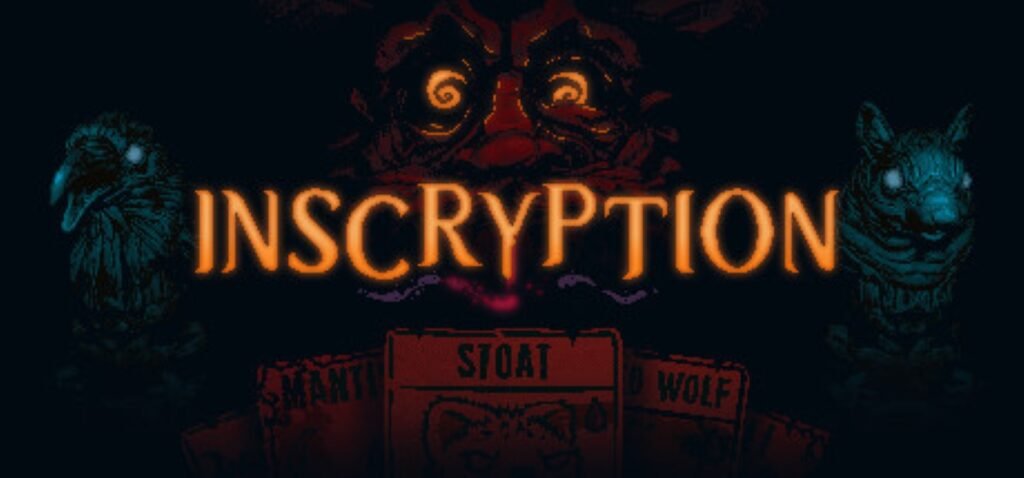
Inscryption
Leshy’s cabin holds more than just a card table. Sitting down to draft a deck of woodland creature cards is only the beginning, and the deeper the game goes, the darker and stranger the secrets inscribed on those cards turn out to be.
Inscryption is a deckbuilding roguelike from developer Daniel Mullins Games, blending escape-room puzzles and psychological horror into something genuinely unlike anything else. Acquiring cards through draft, surgery, and self-mutilation, uncovering the secrets hidden behind the walls of Leshy’s cabin, and building a deck strong enough to survive whatever’s really going on, you’ll embark on an odyssey that keeps rewriting its own rules.
What Makes It Different?
- Acquire a deck of woodland creature cards through draft, surgery, and self-mutilation
- Uncover escape-room style puzzles hidden throughout Leshy’s cabin
- Battle through a deckbuilding roguelike wrapped in psychological horror
- Unravel a story that shifts and transforms in ways few games attempt
- Discover secrets inscribed directly on the cards themselves
- Play through Kaycee’s Mod, a bonus roguelike expansion unlocked after the campaign
- Push through 40 Steam achievements as the mystery deepens
A Card Game That Refuses to Stay One Thing
Inscryption starts as a fairly straightforward card-based roguelike, sitting across a table from a mysterious figure named Leshy. It doesn’t stay that way for long. Escape-room puzzles, unsettling discoveries, and a story that keeps twisting in on itself all pull the game somewhere far stranger than a simple deckbuilder, and part of the appeal is genuinely not knowing what’s coming next. Going in with as little foreknowledge as possible is the best way to experience it.
Kaycee’s Mod Extends the Nightmare
Finishing the main campaign unlocks Kaycee’s Mod, a dedicated roguelike expansion built for players who want more of that card-based tension without the surrounding mystery. Runs here are shorter and more focused, letting players chase increasingly difficult challenge levels once the story’s secrets have already been uncovered.
How Long Does a Run Take?
The average time to beat the main story is about 13 hours, ranging from 10 to 16 hours depending on puzzle-solving and card luck. Main story plus extras runs closer to 16 hours when exploring hidden secrets and side content, while a full 100% achievement completion takes around 33 hours. Kaycee’s Mod adds an extra 18 to 21 hours on top of that if all challenge levels are completed. Individual runs inside Act 1 or Kaycee’s Mod typically last between 20 to 45 minutes, depending on how far a run gets before dying or winning.
Controller Support
No information available.
Good If You Like…
If you enjoyed Blue Prince, SpellRogue, or Roguebook, Inscryption’s mix of deckbuilding and unsettling mystery should be well worth a look.