

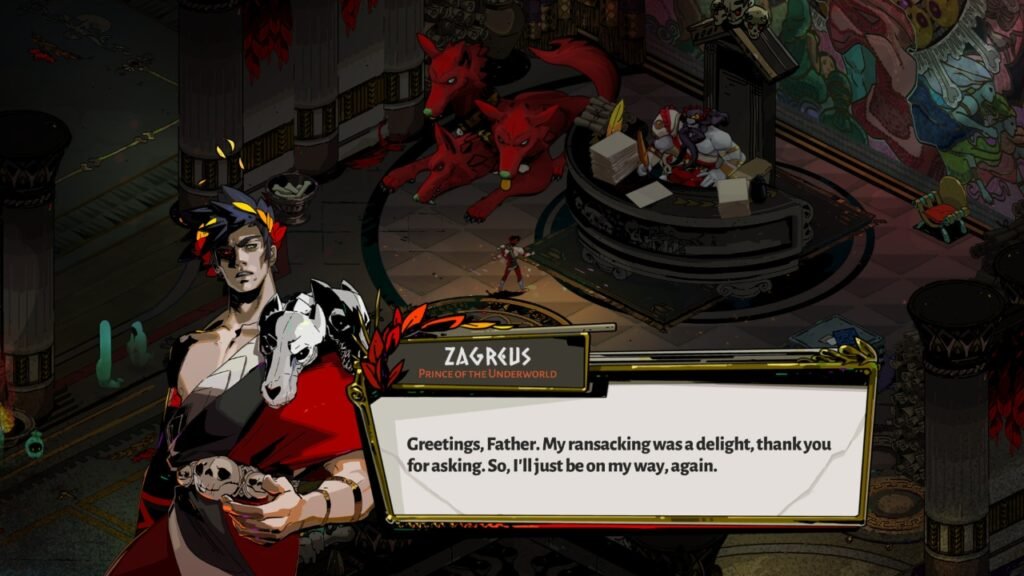
Few things frustrate developers more than watching players mash the skip button through carefully written dialogue. It’s easy to assume the audience simply isn’t interested in the story.
The truth is most players enjoy a good story, but rogue games ask us to repeat the same journey over and over again, This means eventually even brilliantly written scenes begin to lose their impact when you’ve watched them for the tenth or twentieth time. At that point, skipping a cutscene isn’t rejecting the writing. It’s simply choosing to get back to the part of the game you’ve already seen countless times.
The real challenge is designing narrative systems that respect repetition instead of fighting against it, and two of the genre’s biggest names show exactly how differently that problem can be approached.
Hades and Inscryption both understand the challenge, but they solve it in completely different ways. Comparing the two reveals an important lesson about storytelling in roguelites that more developers should be paying attention to.
Repetition Changes How We Experience Stories
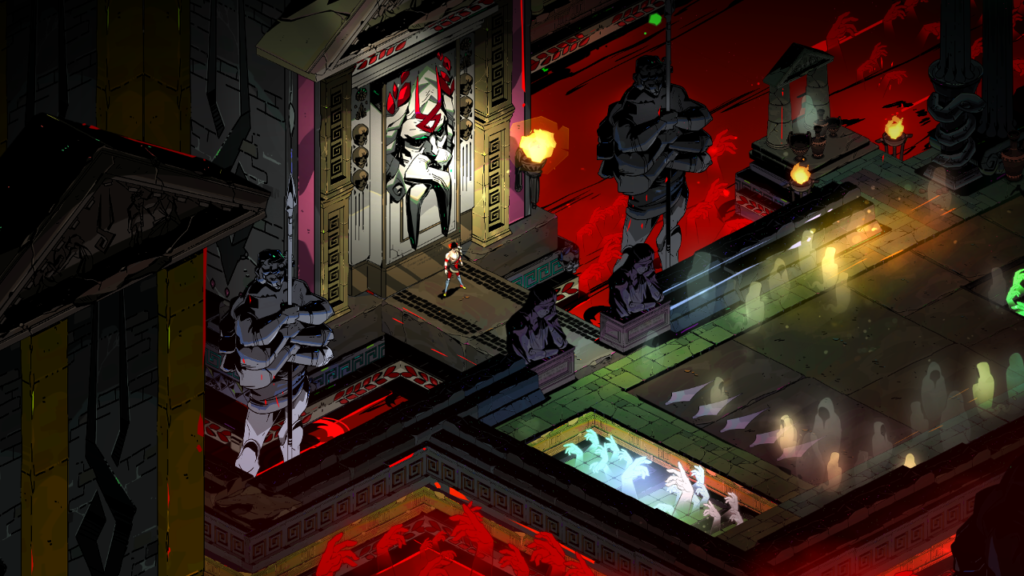
One of the biggest strengths of a roguelite is that no two runs ever play out exactly the same way. Different weapons, random upgrades, new enemies, and unexpected builds, keep the gameplay feeling fresh long after you’ve learned the basics.
Stories don’t have that luxury.
A cutscene is usually written to be experienced once. The first time Zagreus walks through the House of Hades, every conversation feels meaningful because you’re discovering that world alongside him. The tenth time, you’re no longer learning anything new. You’re simply waiting to get back to the action.
Hades delays that feeling better than almost any other roguelite. Supergiant wrote an astonishing amount of dialogue, with characters constantly reacting to your previous runs, your weapon choices, the bosses you’ve defeated, and even conversations you’ve already had. For dozens of hours it creates the impression that the story is moving alongside you.
Eventually, though, even Hades reaches its limits. The game still relies on certain scenes happening in certain places. If you’ve exhausted the available dialogue or need to trigger a specific event before the story can move forward, repetition starts to creep in. That’s usually the moment players begin reaching for the skip button.
The writing hasn’t gotten worse, it’s simply being asked to do something stories were never really designed to do…repeat themselves.
Inscryption Solved the Problem Differently
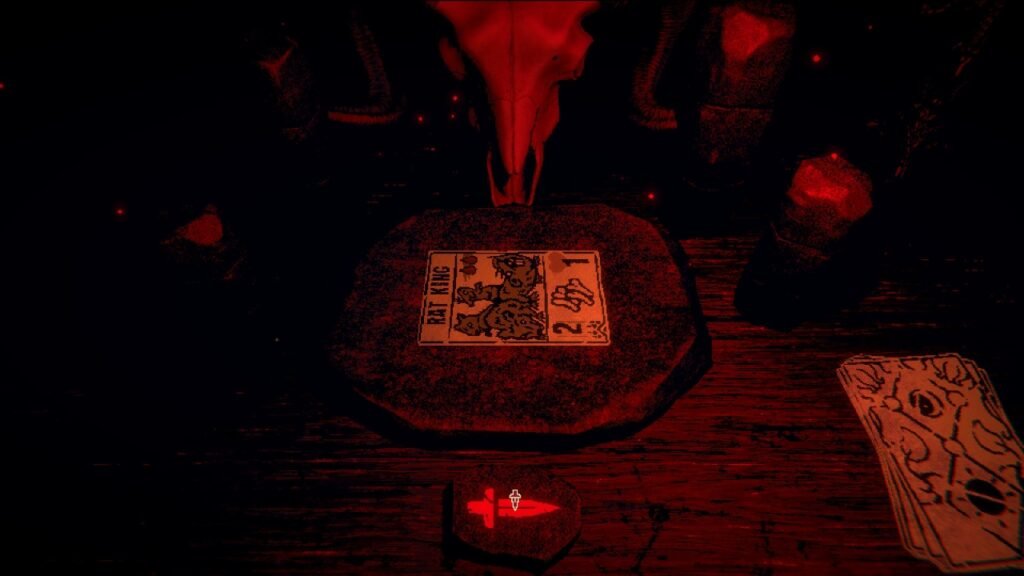
Inscryption tackles the same challenge from almost the opposite direction. Instead of trying to make every repeated conversation feel different, Daniel Mullins built the game so players rarely revisit the same narrative moments at all. Each act introduces a completely different structure, visual style, and even a new narrator, allowing the story to move forward instead of looping back on itself.
That’s why its biggest story moments remain so memorable. Once you’ve left Leshy’s cabin behind, the game has no reason to replay those opening scenes because the structure simply doesn’t allow it. The narrative keeps evolving alongside the player rather than resetting every time a run ends.
It’s a much more demanding approach. Writing what effectively feels like three distinct games isn’t something every studio can realistically commit to, and it’s easy to understand why most don’t.
Even so, Inscryption demonstrates an important idea that more roguelites could learn from. Rather than treating repeated cutscenes as an unavoidable consequence of the genre, it redesigns the structure so repetition becomes far less common in the first place.
That’s a very different solution, but it’s one that feels increasingly relevant as more roguelites place storytelling at the heart of the experience.
The Best Cutscene Is Sometimes the One You Never Need to Skip
Hades and Inscryption arrive at very different solutions, but both highlight the same design challenge. The more often a game expects players to repeat itself, the more carefully it has to think about how its story is delivered.
Hades solves part of the problem by writing an extraordinary amount of dialogue, making each return to the House of Hades feel new for far longer than most roguelites manage. Inscryption takes a completely different approach, restructuring its entire campaign so players rarely revisit the same narrative in the first place. Neither solution is simple, but both recognize something many games still overlook. Players don’t always skip cutscenes because they dislike stories, they skip them because they’ve already experienced them.
As roguelites continue placing a bigger emphasis on narrative, I think that’s a lesson more developers will have to embrace. Great writing will always matter, but in a genre built around repetition, how that writing is delivered may matter even more.