

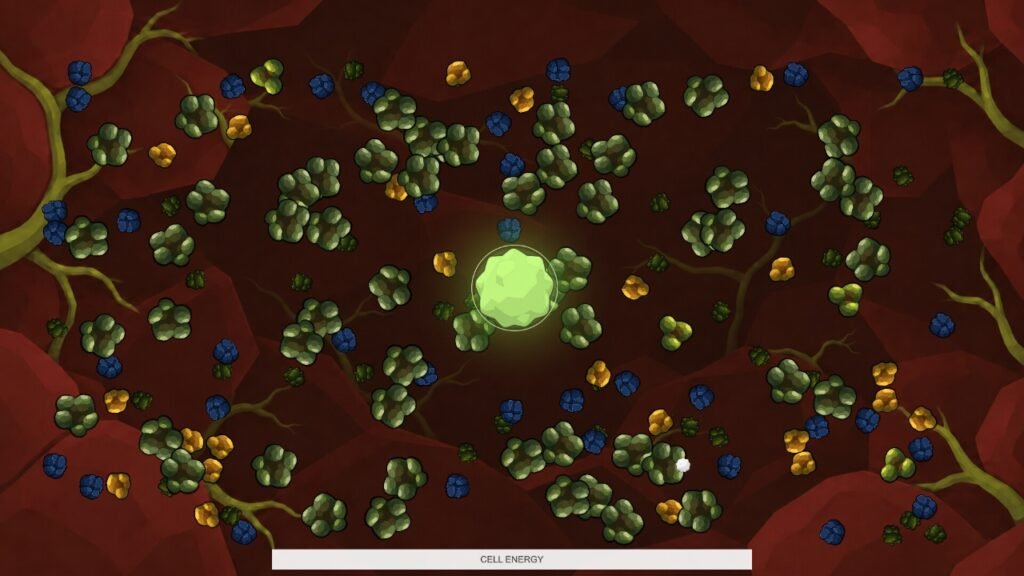
Every cell you control in We Will Die for You is going to die. You know it, the cell probably knows it, but before it goes, it can spend its remaining energy devouring disease and debris, gathering Protein, and making life a little easier for whichever unfortunate white blood cell gets sent in next.
Announced today by developer Joe Reid of Front Porch Games, We Will Die for You is an incremental action game set inside the human body. It’s heading to Steam in Q1 2027, and its wonderfully ominous tagline sums up the whole idea: “Every cell dies. Your body remembers.”
You’ll start small, quite literally, before gradually building an immune system capable of taking on tougher particles, new areas of the body, and nine planned disease bosses. Along the way, your increasingly overqualified white blood cells can pick up everything from improved suction to lightning, missiles, lasers, and orbiting satellites.
Ahead of today’s reveal, we spoke to Joe about where the idea came from, what happens when a cell inevitably dies, how real biology has influenced the game, and why designing nine completely different diseases is proving rather complicated.
For someone seeing We Will Die for You for the first time today, can you talk us through what their first few minutes with the game might look like? What can that first fragile little white blood cell actually do?
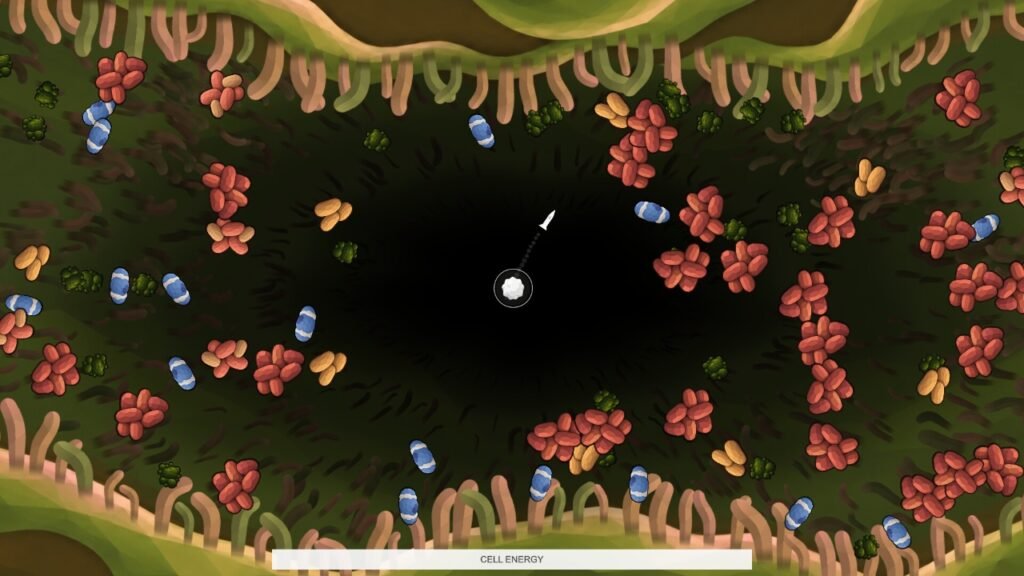
Joe: The player starts as a small white blood cell in the Bloodstream. You steer the cell around, while its suction automatically pulls nearby debris toward you. You break down that debris and collect Proteins.
At first, your reach and power are limited, so you have to work with smaller targets. Eventually, your cell will run out of energy. That’s when you spend the Proteins you’ve collected on permanent upgrades before sending in the next cell, which starts with the improvements you’ve earned.
Players will eventually leave the Bloodstream and travel through Wounded Tissue, Nerves, Guts, the Liver, and other areas. What changes when you move into a different part of the body? Are we talking about new things to consume and tougher enemies, or can the regions change the way you actually play?
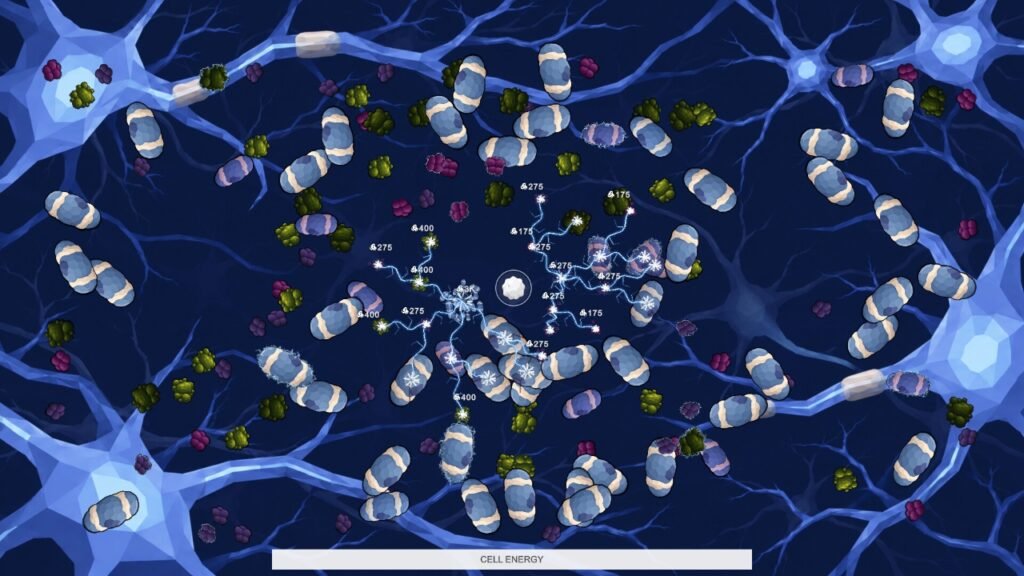
Each region changes the types of targets you’ll encounter, their toughness and rewards, the environment layout, and the abilities available to you. Every area has its own look and interactions, too.
The Bloodstream has particles constantly flowing across the screen, while the Gut is more constrained. The Nerves have charged particles that release lightning when broken, for example.
Your abilities carry forward as you progress, so each new region builds on what you’ve already unlocked.
Protein can be spent on movement, suction range, breaking strength, and energy. Are there meaningful trade-offs between those upgrades? For example, could pouring everything into breaking strength leave you with a terrifyingly powerful cell that exhausts itself almost immediately?
Protein is limited, so you’re always making choices about what to improve. Increasing breaking power lets you take on tougher targets, while movement, suction range, and energy improve other parts of your cell.
Interestingly, increasing breaking power doesn’t make your energy drain faster, so there’s no direct trade-off there. The main decision is simply what you want to upgrade next.
There are several upgrade options after each run, including basic skills and new abilities. Personally, I tend to go for radius and power. My wife, on the other hand, prioritizes movement and control.
Disease bosses are mentioned in the announcement, but we don’t know much about them yet. What can you tell us about the kinds of diseases we’ll be taking on, and what does a boss fight inside the human body actually look like?
We’re planning nine unique bosses for launch. The first is an enlarged, sick red blood cell infecting the bloodstream. The Hematoma is another boss shown in the reveal materials. Its encounter involves opening vulnerable areas and clearing out the infection before those areas close again, adding a timing element alongside the upgrades you’ve earned.
Each boss is tied to a particular body region, and you’ll need both your upgrades and an understanding of the boss mechanics to defeat them.
How far down the biology rabbit hole have you gone while designing all of this? Have you found yourself researching something incredibly specific at 2 a.m. because you suddenly needed to know whether it could plausibly appear in the body?
My appreciation for biology started in college at UAB. Anatomy class included studying cadavers, which was mind-blowing, fascinating, and unsettling all at once. It also gave me a huge appreciation for the people who donated their bodies for science and helped build my understanding of real human biology.
I have a solid base of knowledge from that, but I don’t want biological facts to get in the way of making the game fun. It’s a fictional game, after all. One of the abilities is literally a missile launching from the character.
So there are some limits to how seriously we’re taking the biology.
Does defeating a disease have any lasting effect on the body itself? Since Immune Memory is such an important part of the game, I’m curious whether beating a particular disease makes future cells better equipped if they encounter it again.
Immune Memory is the permanent progression system. The Proteins you collect and the upgrades you purchase carry forward, so every cell contributes to the next one. Defeating a boss also records that victory and opens the next region. The individual cell is temporary, but the progress stays.
Originally, defeating a boss unlocked a new skill or ability afterward. That turned out to be too difficult for players to understand because they weren’t particularly drawn to a new item floating around after 20 minutes of destroying debris.
So we changed it. Now the upgrade has to be implemented before the boss fight, and it’s required during the fight itself.
What’s been the feature that’s caused you the most trouble so far? Not necessarily the biggest feature, but the one that you thought would be easy to implement and then refused to behave once you put it into the game.
The UI and controller support have been harder than I expected. I’m also working on all nine bosses, and making each one feel genuinely different has been a challenge.
I want every boss to feel connected to the disease it represents. The game is fictional, but I still want there to be a hint of simulation and biological grounding rather than simply reskinning the same fight nine times.
Making those mechanics feel cool without falling into that trap has definitely been one of the harder parts.
You’re developing We Will Die for You through Front Porch Games. What can you tell us about yourself, and how did this particular project come together?
I’m a solo developer. Making games has been a lifelong dream of mine. I’ve always been a gamer, but for a long time I thought making a game by myself was simply too big of a project. This is essentially my fourth job, but it rarely feels like work because I love doing it.
It’s become a creative outlet for ideas that I don’t usually get to explore through my regular 8-to-5 work or side gigs.
We Will Die for You is currently aiming for Q1 2027. Between today’s announcement and release, what’s next for the game, and when can players expect to see more of it?
We Will Die for You is currently planned for a Q1 2027 release on Windows PC through Steam. The full gameplay trailer is going live today, October 5, and players will be able to wishlist the game once it’s live. We’re also working toward a playable demo, hopefully in about a month.
That timing will probably put the demo after the upcoming Next Fest, but we’re still working out the exact schedule. We plan to attend as many festivals as possible, including the February Next Fest.
Every Cell Dies. Your Wishlist Doesn’t Have To
We Will Die for You is officially out in the world today, with the first full gameplay trailer giving us our first proper look at Joe’s tiny, increasingly heavily armed immune system in action.
There’s still plenty we haven’t seen. Eight more disease bosses need revealing, more areas of the body are waiting beyond those already announced, and a playable demo is currently being worked on for later this year.
For now, though, We Will Die for You can be wishlisted on Steam ahead of its planned Q1 2027 release. We have until then to decide whether we’re Team Power or Team Movement. We’re going Power.
Thank you for the great interview/questions! I hope your audience enjoys what they see! 0
0
It was a pleasure Joe, thank you too for letting us be a part of your big announcement! I can’t wait to check out the demo when it arrives 😊 0
0