
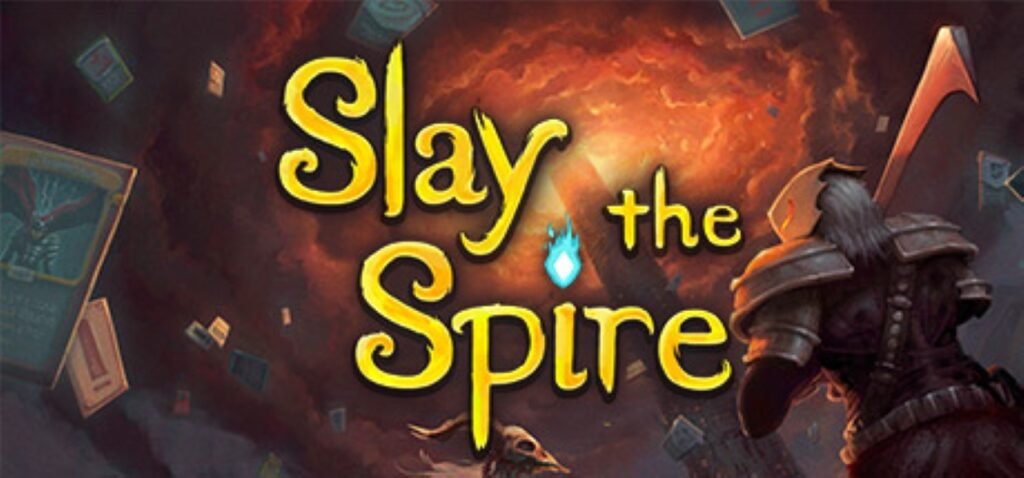
Few games have had as much influence on the deckbuilding roguelike as Slay the Spire. Years after its release, it’s still the game countless others are measured against, combining tactical card battles with roguelike progression in a way that has inspired an entire wave of successors. Every climb begins with a modest deck and ends with whatever combination of cards, relics, and hard-earned compromises you manage to assemble along the way.
Battles are turn-based, with enemy intentions shown before you act, giving you the chance to calculate incoming damage, decide how much energy to spend, and work out whether this is the turn to defend or push for the kill. Victory usually rewards you with another card, but taking everything offered is rarely the smartest choice.
Each journey through the Spire follows a changing map filled with battles, elites, campfires, shops, treasure, and mysterious events. You choose your route one node at a time, weighing safer paths against the stronger rewards waiting behind more dangerous encounters. Four playable characters bring their own card pools and mechanics, while more than 350 cards and 200 items give each of them plenty of ways to develop across repeated runs.
What Makes It Different?
- Builds every run around creating and refining a deck
- Features four playable characters with their own card sets
- Includes more than 350 cards
- Offers over 200 items to discover
- Changes the Spire’s layout with every climb
- Lets you choose between safer and riskier routes
- Features more than 50 combat encounters
- Includes over 50 mysterious events that can help or harm you
- Uses relics with powerful effects and interactions
- Can make obtaining certain relics cost more than gold
- Includes Daily Climbs with worldwide comparisons
- Offers a Custom mode with mix-and-match run modifiers
Every Card Has to Earn Its Place
New cards appear regularly, but accepting one always changes the odds of drawing everything already inside your deck. A powerful attack may look useful on its own, yet it can make a focused strategy less reliable if it has no real connection to the cards you have already collected.
The strongest decks are not necessarily the largest. Removing weaker cards can be just as valuable as gaining new ones, while upgraded cards can make a familiar strategy much more dependable. Every reward therefore comes with a question: does this improve the deck you are building, or merely give you one more card to draw around?
Choosing How Much Danger to Face
The route to the next boss is never fixed. One branch may offer more campfires and ordinary battles, while another leads through elite enemies capable of ending the run in exchange for better rewards. Shops, treasure rooms, and unknown events create further reasons to take one path over another.
Health carries between encounters, so a careless victory can leave you badly prepared for whatever follows. Sometimes the right decision is to avoid an elite and protect the run. At other times, taking that risk is the only way to collect enough power to survive the later floors.
Relics Can Rewrite the Rules
Relics provide passive effects that stay with you for the rest of the climb. Some strengthen particular cards or resources, while others change how you approach battles altogether. Their effects can work together in powerful ways, especially when they support the direction your deck has already taken.
They are not always handed over freely. The Spire can attach a cost to its best rewards, asking you to trade gold or accept another consequence for the chance to become stronger. Deciding whether that price is worth paying can shape the rest of the run as much as any card choice.
Four Characters, Four Ways to Climb
Each playable character begins with a different deck and has access to their own set of cards. That changes far more than the artwork on your attacks. It affects how you generate defense, deal damage, manage resources, and prepare for longer fights.
Learning one character does not mean you have solved the others. Cards that would be essential in one deck may not exist for another, and strategies that work comfortably on one climb can fall apart when a different character has to face the same enemy.
Good If You Like…
Players who enjoy Monster Train, Wildfrost, Vault of the Void, or Roguebook should appreciate Slay the Spire’s deckbuilding, branching routes, relic combinations, and run-based strategy.
 Rogue Take: Enough With the Spire Clones, Give Us More VarietyAugust 16, 2026It's hard not to notice the sheer number of deckbuilders being launched lately. Now listen, I love deckbuilders. The genre has given us some of the smartest, most…
 Beyond the Spire: 10 Rogue Games To Satisfy Your Slay the Spire ItchJuly 21, 2026Few rogue games have changed the genre quite like Slay the Spire. Mega Crit didn't just make one of the best deckbuilding roguelikes ever created; it redefined what…
 Slay the Spire Merchant Gets Plush Treatment as MegaCrit Launches Limited Makeship CollectionJuly 11, 2026MegaCrit is turning the Merchant into merchandise, and the collection comes with something a little unexpected... a tiny rug. The developer announced a new Makeship collaboration featuring a…
 Slay the Spire Teases New Merchandise Drop for July 10July 5, 2026MegaCrit has announced on X that special new wares are arriving July 10 at 5AM PST, accompanied by the sound of jingling coins. The studio offered no further…
 Rest or Forge? The Campfire Choice Every Slay the Spire Player Must MasterJune 20, 2026The campfire in Slay the Spire has ruined more perfectly good runs than most bosses. That might sound unfair. After all, the campfire isn't actively trying to kill…
 Slay the Spire 2’s Latest Patch Aims for Stability Ahead of Main Branch MergeJune 10, 2026You're about to see Slay the Spire 2 get a little more polished. MegaCrit has released beta patch v0.107.0, and while it isn't packed with major new content,…