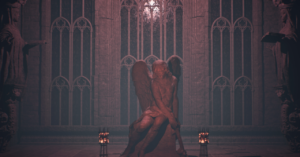

Sortech Studio, a small independent outfit built by developer Tomasz Soroka with support from his family, released Heroes of Retribution on June 29, 2026 into Early Access. The game is a roguelike RPG set in a frozen, demon-infested wasteland where humanity has collapsed and fractured into rival factions.
Players take the role of a tank commander aligned with the Cleric faction, beginning with grounded objectives — keeping a lamppost burning to hold back demons, retrieving coal from a nearby mine — before the scope expands into a larger struggle for human survival. The opening missions serve as an on-ramp into systems that grow considerably more complex as runs progress.
Combat and progression are built around three interlocking layers. The tank itself can be upgraded with new shell types, launchers, and other hardware enhancements discovered during runs. Heroes scattered across the world can be recruited to form a party, each bringing active abilities and passive skills that can reshape how a run plays; some abilities unlock entirely different approaches to encounters. Relics function as a combinatorial layer on top of skills, with specific combinations producing amplified effects rather than simply stacking flat bonuses.
Faction relationships add a strategic dimension between fights. The world is divided among competing groups, and players choose which to ally with and which to antagonise as they progress. Those choices carry consequences that affect what resources, heroes, and paths remain available — making allegiance a meaningful variable across runs rather than a cosmetic one.
The game launched into Early Access on June 29, 2026 with its main story complete but with acknowledged rough edges in quest polish and one scenario still being refined. Soroka has committed to expanding the game with additional quests and storylines during the Early Access period. Character options at launch are built around a pre-defined protagonist, with broader customisation planned as development continues. Recruitable heroes each carry level-gated skill trees, so party composition deepens incrementally rather than front-loading its complexity.