
Every game eventually runs out of things to show you. You see the ending, you learn the maps, you run out of quests. The credits roll, and so does the dopamine. The experience is done. Roguelikes don’t work that way.
There’s a reason Balatro grabbed the world by the collar earlier this year. There’s a reason Vampire Survivors turned into a cultural moment on hardware that wouldn’t break a sweat running a PowerPoint. Neither of these games would win a visual fidelity award. Neither needed to. They were too busy being impossible to put down.
That’s the thing about roguelikes and roguelites that the wider gaming conversation keeps dancing around without saying directly: the genre is one of the last spaces where the game itself doesn’t have to change for the experience to feel new. The cards shuffle differently. The run goes sideways in a new direction. You try a build you’ve never tried, and suddenly you’re two hours deep at a time you promised yourself you’d stop. The content doesn’t expand, but the possibility space does, every single time.
It’s a remarkable trick.
Simple on the Surface, Impossible to Exhaust
Vampire Survivors costs the same as a gas station energy drink and looks like something your cousin made over a weekend in 2008. You hold no buttons. You point your character vaguely at enemies and let the math happen. By any conventional measure, it should be a footnote.
Instead it became the argument for why production value and engagement are not the same conversation.
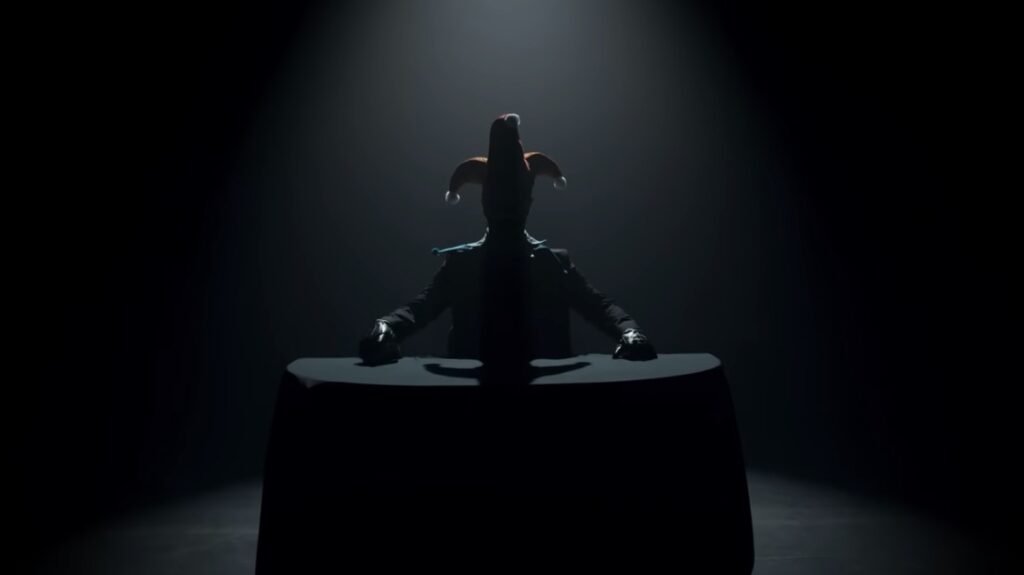
Balatro takes a deck of cards, a poker ruleset, and bends both until they no longer resemble themselves. There’s no combat. There’s no narrative in the traditional sense. There are Jokers that interact with other Jokers in ways the game barely explains, and figuring out the interactions is ninety percent of the experience. The art style is neon-soaked and deliberately lo-fi. It shipped and immediately started appearing on game of the year lists alongside titles that cost a hundred times more to make.
The pattern here isn’t accidental. Roguelikes succeed with restraint because restraint forces depth over distraction. When you strip away the cinematics and the open world and the live service calendar, what’s left has to carry the experience on its own. In roguelikes, what’s left is usually a system so tightly designed that mastering it takes genuine time, and random generation ensures that the path to mastery is never quite the same twice.
Why the Genre Hits the Way It Does
Game designers talk a lot about feedback loops. The idea that fun comes from doing a thing, seeing a result, adjusting, doing the thing again. Roguelikes are built almost entirely from feedback loops, stacked on top of each other, all running simultaneously.
You pick up a new item. You fight something. The item procs in an unexpected way. Now you’re restructuring the rest of your run around that interaction. You die. You come back knowing something you didn’t know an hour ago. The next run starts and the board is different, but you are not.
That progression loop, the one that lives in your head rather than on a save file, is one of the most satisfying things a game can offer a player. Beginners feel it because every run teaches something. Veterans feel it because optimization and experimentation never fully exhaust the system. The genre has one of the widest on-ramps in gaming while still offering a ceiling that experienced players spend hundreds of hours chasing.
It also helps that the runs are self-contained. You don’t need to remember what happened last Tuesday. You don’t need to maintain a quest log. You start, you build, you see how far you get, you try again. That structure fits modern play sessions in a way that sprawling games often don’t.
The Wild West Is Wide Open
The genre is still figuring out what it is. Roguelite deck-builders. Roguelite shooters. Roguelite farming sims. Dungeon crawlers with roguelite progression. Auto-battlers with roguelite runs. Every few months something ships that takes the randomization-and-permadeath skeleton and drapes something unexpected over it, and half the time it works.
That’s not a sign of a genre in trouble. That’s a genre in expansion, and nobody’s mapped the whole territory yet.
Hades proved that story and roguelikes could coexist and elevate each other. Slay the Spire established a template so solid that an entire sub-genre of deck-builders built itself around trying to improve on it. Dead Cells showed that tight action-platforming and roguelite design were a natural fit. Each of these games opened a door that hadn’t been opened before, and the doors are still opening.
The experimentation is the point. There’s no settled formula here. The boundaries are still being drawn.
Why AllRogues Exists
Because someone needs to be paying attention.
The roguelite space moves fast. New releases, new design experiments, discourse about what even counts as a roguelike versus a roguelite, communities forming around specific titles with the intensity of sports fandoms. It’s loud and it’s interesting and it rewards the kind of coverage that takes it seriously.
AllRogues is here because the genre deserves a dedicated home. Not a corner of a broader site, not a tag in a database, but a place built around the idea that roguelikes and roguelites represent something genuinely worth following, worth playing, and worth talking about with the depth they deserve.
The cards get shuffled every run. We’re here to watch every hand get played.