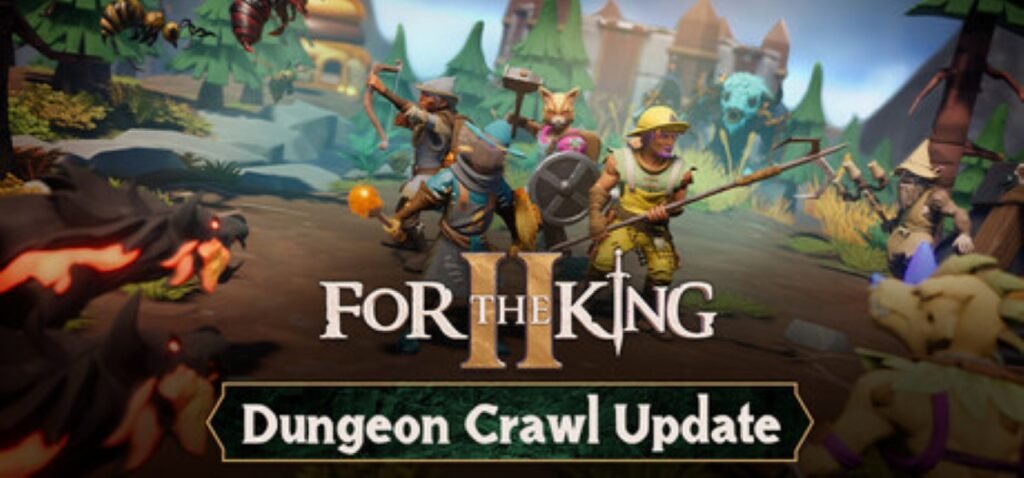
For The King II is a turn-based roguelite RPG built around leading a party across the procedurally generated world of Fahrul. You can travel alone while controlling every member of the group, or bring up to three friends into the campaign through online or offline co-op. Movement, encounters, and combat all take inspiration from tabletop games, with dice rolls influencing how each adventure unfolds as you explore the map, complete quests, collect equipment, and prepare for increasingly dangerous battles.
The campaign is divided into seven narratively connected adventures offering more than 30 hours of gameplay, but completing the story is only part of the experience. New maps and encounters keep future playthroughs unpredictable, while failure allows you to begin again with stronger starting options unlocked through the Lore Store. An infinite dungeon mode called Dark Carnival provides another challenge, sending your party through themed rooms and branching paths to see how many floors they can survive.
What Makes It Different?
- Combines turn-based RPG combat with roguelite and tabletop mechanics
- Supports solo play and parties of up to four players
- Includes both online and offline co-op
- Uses procedurally generated campaign maps
- Features dice-inspired movement, encounters, and combat
- Includes seven narratively connected adventures
- Offers more than 30 hours of campaign content
- Uses a Battle Grid where positioning can provide buffs and penalties
- Lets party members protect allies, reposition enemies, and interact with battlefield hazards
- Unlocks better starting items for future playthroughs
- Includes the endless Dark Carnival dungeon mode
- Features environments ranging from forests and toxic swamps to lava-filled wastelands and tropical seas
Every Journey Begins With a New Map
Fahrul changes each time you begin an adventure, so reaching an objective is rarely as simple as following a familiar route. The map can place quests, encounters, enemies, and opportunities in different locations, forcing the party to make fresh decisions about where to travel and how much danger to accept along the way.
Dice rolls add another layer of uncertainty to almost everything you do. Movement can determine how far a character travels, while encounters and attacks can succeed or fail depending on the results. Equipment, character statistics, and Focus give you ways to influence those odds, but no plan is completely protected from a badly timed roll.
Four Heroes, One Party
Solo players control the entire group, managing each character’s movement, inventory, and combat actions. In co-op, those responsibilities can be divided between as many as four players, turning equipment choices and route planning into shared decisions.
Building a balanced party matters because each character can contribute something different. One hero might stand at the front with a shield to protect allies behind them, while another controls enemies with magic or attacks safely from the back row. Weapons and items collected during the journey continue shaping those roles as the adventure becomes more dangerous.
Positioning Changes the Battle
Combat takes place on a Battle Grid where the front and back rows affect how characters and enemies perform. Moving a hero into the right position can protect a vulnerable party member, while forcing an opponent onto a dangerous tile can turn the environment against them.
Burning areas, defensive formations, and abilities that entangle or reposition enemies make the layout part of the fight rather than a backdrop. Winning therefore depends on more than choosing the strongest attack. You also need to consider turn order, available space, and which party member is best placed to deal with the next threat.
Failure Still Opens New Possibilities
A defeated party does not leave every achievement behind. Progress made during adventures unlocks new items that can be drafted into the starting loadout of future campaigns, giving the next group more options from the beginning.
Dark Carnival offers a separate test for parties that want to keep going until defeat becomes unavoidable. Each floor introduces more themed rooms, branching choices, and rewards, with carnival tickets opening new paths as you attempt to survive deeper into the dungeon.
Good If You Like…
Players who enjoy For The King, Across the Obelisk, or Inkbound, should appreciate For The King II’s combination of cooperative adventuring, turn-based battles, procedural campaigns, and roguelite progression.
No articles tagged with this game yet. Tag a post with "For the King II" and it will appear here.