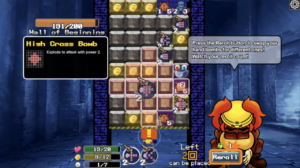

Every turn in Dungeon Bomber, you place exactly one bomb from your hand and detonate it — everything follows from that single constraint. The blast hits coin blocks, damages monsters, and chips away at the block quota the level demands, so each placement carries simultaneous economic, combat, and structural consequences. Each level sets a block destruction target you must hit while keeping your HP above zero; let monsters creep to the bottom of the field and they deal damage instead.
The deck is the primary growth axis. Bombs vary in blast radius, raw power, and special traits, and spending coins earned from destroyed blocks lets you add stronger explosives to your hand. The fusing system layers on top: combine two bombs to widen one’s blast radius or pass a special effect from one to the other, allowing a single late-run bomb to carry several inherited properties. Chaining detonations across a dense field is where the game’s satisfaction lives — a well-placed bomb triggers a cascade that clears monsters and blocks simultaneously.
- Turn-based bomb placement with chain-reaction detonations
- Deck-building via coin purchases between encounters
- Bomb fusion system that transfers or amplifies effects across explosives
- Monsters that advance across the field and deal damage on reaching the bottom
- Block destruction quota as a per-level win condition alongside HP survival
Dungeon Bomber was developed by TUKUCHAU-OJISAN and released on June 29, 2026. A major demo update arrived just before launch. The month of July 2026 saw five successive patches — versions 1.0.1 through 1.0.5 — suggesting active early post-launch tuning. Players who enjoy spatial puzzle logic wrapped inside short run structures, and who prefer their deck-building expressed through physical placement rather than card sequencing, will find the format fits that appetite directly.