

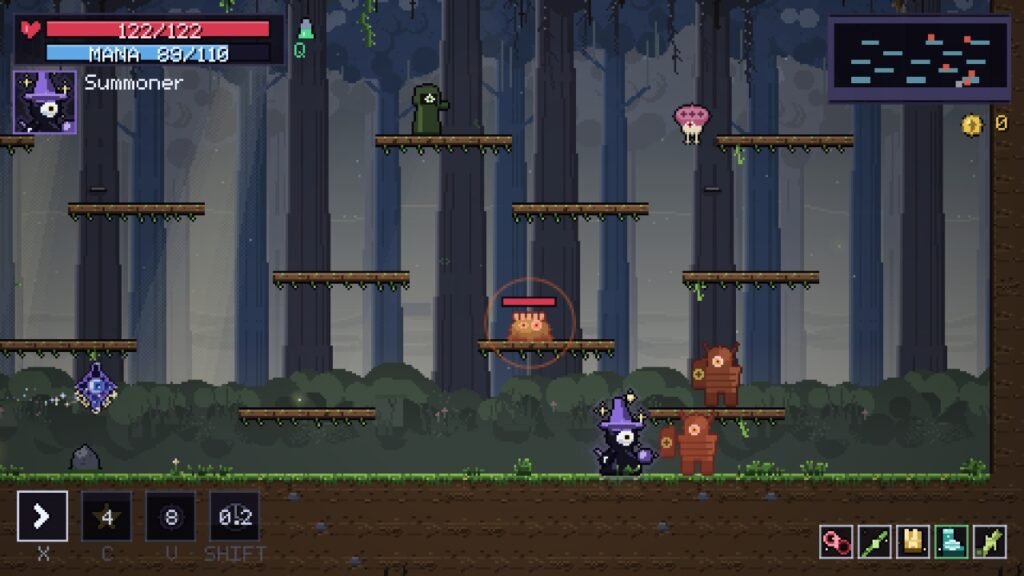
You start The Only Eye: Arcane Legacy as a mage, but you probably won’t stay one for very long. Bitroot Studios’ 2D action roguelite launches today on Steam, sending you into a dark fantasy world where new classes, masteries, relics, and permanent upgrades gradually open up as you push further through each run.
There are 20 playable forms to discover, plenty of ways to change how their abilities work, and relics that can give you enormous advantages if you’re willing to accept whatever unpleasant drawback comes attached.
Then, once you’ve fought through the campaign and dealt with its bosses, The Only Eye opens up another progression system and asks how much further you’d like to push things.
Your Mage Is Only the Starting Point
Every journey begins with the mage, but unlocking new classes gives you completely different ways to approach combat. Each has its own abilities and playstyle, with class masteries and different forms of specialisation giving you more to develop as you continue playing. That means progression isn’t simply about making the same character stronger until the numbers get big enough.
Relics can also change things.They come in different rarities and can be combined to create synergies around whatever class you’re currently using. Some alter abilities and reshape the way a build works, while others offer much more power in exchange for penalties.
A particularly strong relic might therefore be exactly what the current run needs, but taking it can also leave you dealing with another problem for the rest of the journey. With different classes and relic combinations available, there’s plenty of room to find a setup that works before death sends you back home to start putting together another one.
Dying Still Leaves You With Something
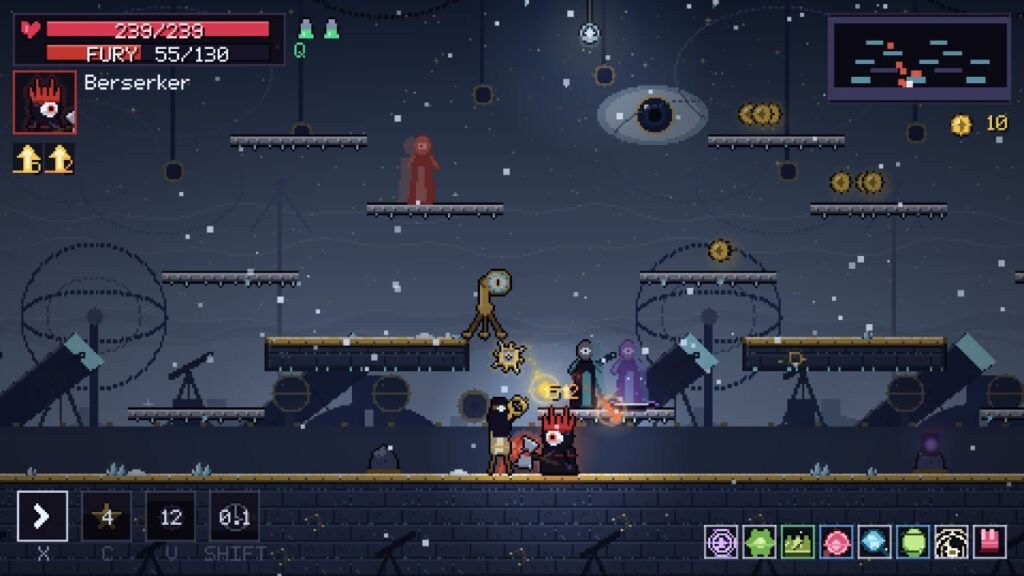
Runs take you through procedurally generated areas filled with different rooms, enemies, treasures, shops, events, and environmental hazards. The layouts become more involved as you move into advanced regions, adding vertical sections and traps alongside tougher encounters. Eventually there are bosses to deal with too, giving whatever build you’ve assembled a chance to prove it can actually do the job.
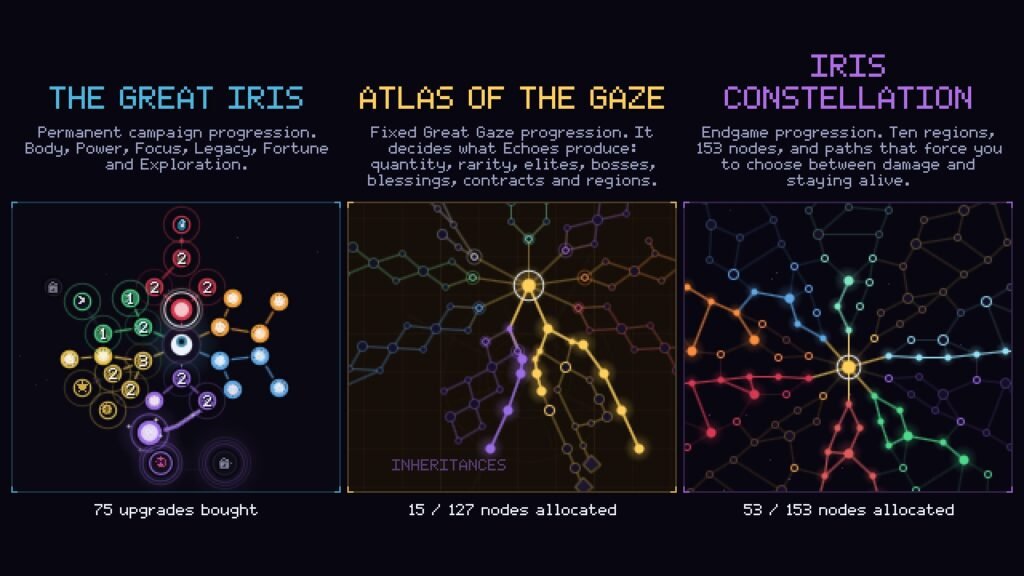
If it can’t, dying ends the run without wiping away everything you’ve achieved. Back at the hub, you can unlock classes, develop masteries, and continue working through permanent progression before heading out again. The people living there also have their own stories, with dialogue changing as bosses fall, new classes awaken, and more secrets are uncovered.
That means returning home isn’t only an opportunity to spend whatever you earned. Characters can have something different to say and the hub itself reflects how far you’ve made it into the journey, giving the quieter moments between runs their own part in the wider story.
The Campaign Isn’t Where It Stops
Getting through the main campaign unlocks a dedicated endgame built around pushing your characters and builds much further. Visions, multiple difficulty tiers, and the Atlas of the Gaze let you modify the challenges and rewards ahead, creating another progression path once the regular journey has been completed. It’s where stronger builds get somewhere to go rather than simply being used to repeat the same campaign again.
With 20 playable forms, class masteries, elemental reactions, multiple progression trees, and relic combinations to experiment with, there should be quite a bit to work through before you’re ready to find out how far those endgame systems can be pushed.
It’s an ambitious amount of progression for a game developed by a solo developer, particularly when the campaign itself is only supposed to be the first part of it.