

Most adventurers head into dungeons armed with swords, shields, and enough healing potions to survive a small war. In Dungeon Drafters, your most valuable weapon is a deck of cards. Need to deal with a troublesome monster? Throw a fireball at it. Surrounded by enemies? Summon a few allies or split the ground beneath their feet. It’s an impressive collection of tricks for someone whose entire fighting strategy depends on having the right cards in hand.
This week’s Rogue Discovery is Dungeon Drafters, a tactical dungeon-crawling roguelite developed by Manalith Studios and published by DANGEN Entertainment. Originally released on April 27, 2023, it combines turn-based grid combat, collectible cards, and mystery dungeon exploration in a colorful fantasy world where magic comes from the cards you carry.
With six playable characters, six dungeons, hundreds of spells, and plenty of opportunities to lose your hard-earned treasure, it’s an fantastic choice for anyone who loves rogue games with cozy imagery and high build opportunities.
When the Cards Do All the Talking
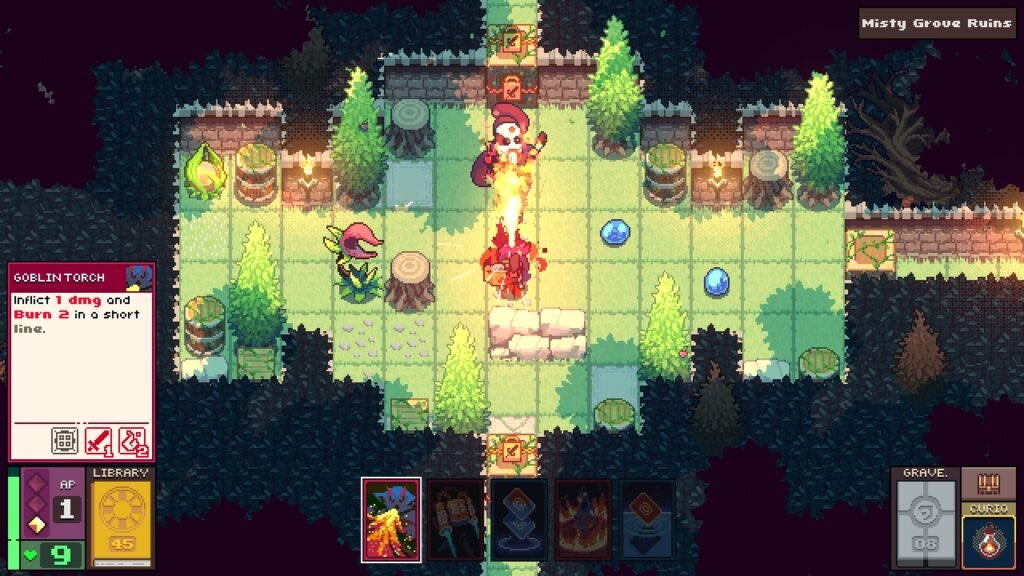
Combat in Dungeon Drafters takes place on a grid, where positioning is just as important as the cards you’re holding. Rather than simply selecting an attack and watching the damage numbers appear, you’ll need to consider where enemies are standing, which spaces are safe, and how your available spells can change the situation.
Your deck acts as your entire magical arsenal. Cards can unleash fireballs, create earthquakes, summon allies, and produce other effects that influence the battlefield. A straightforward encounter may involve using a powerful spell to eliminate a nearby monster. More complicated fights can require several cards working together, especially when enemies are positioned in awkward places or threatening to surround you.
One of the benefits of this game is how much freedom the system gives you to experiment. You could use one spell to create an opening, then follow up with another that takes advantage of the enemies’ positions. Alternatively, you could summon allies to help control the battlefield while preparing a more powerful attack.
It’s a different approach from traditional roguelike deckbuilders, where combat often revolves around dealing damage and defending against incoming attacks. Here, movement and positioning introduce another strategic decision, making the battlefield itself an important part of your planning.
Six Adventurers, Hundreds of Ways to Cause Trouble
Before heading into the dungeons, you’ll choose one of six playable adventurers. Each begins with a signature deck designed around a particular playstyle, giving you a starting point for your adventures. However, you’re not permanently restricted to that character’s initial approach.
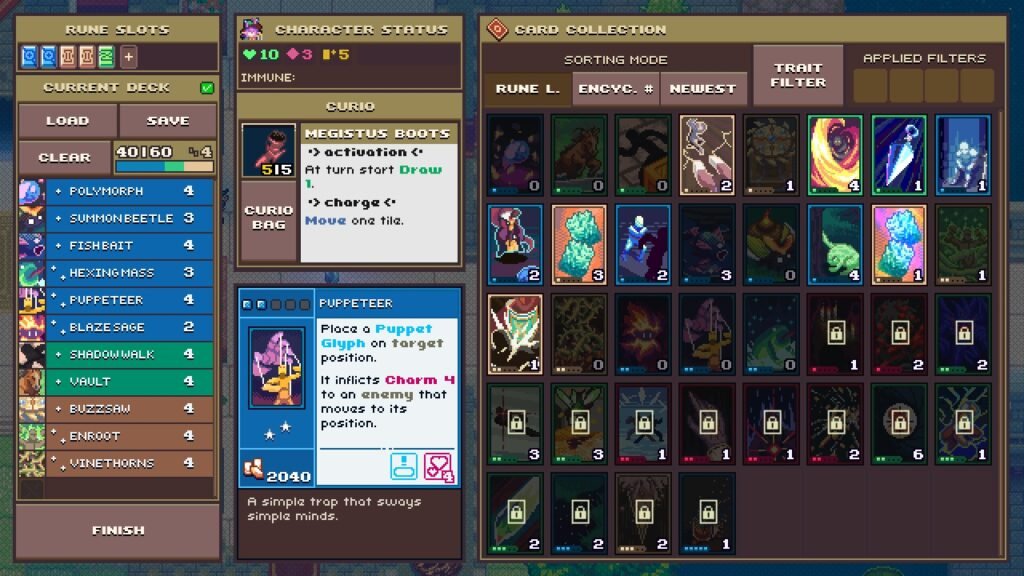
As you discover more cards, you can experiment with different strategies and build decks that move beyond your adventurer’s original strengths. That flexibility is one of Dungeon Drafters‘ biggest attractions, especially if you enjoy finding unusual combinations rather than following a fixed character build.
The game features more than 300 cards, offering plenty of room for experimentation. You could concentrate on powerful offensive spells, filling your deck with attacks capable of clearing groups of enemies. Alternatively, you might prefer summoning creatures to do some of the fighting, or combining different magical effects to create more elaborate strategies.
With so many cards available, building a deck becomes an ongoing process of deciding what works, what doesn’t, and which new discoveries deserve a place in your collection. A card that seems unremarkable on its own might become far more useful when combined with something you’ve already unlocked. That encourages you to revisit older abilities and experiment with combinations you may have overlooked.
Of course, creating an enormous deck filled with every interesting spell you discover isn’t necessarily the best approach. You’ll still need to consider whether those cards work together and how reliably you can use them during combat.
Six Dungeons and an Awful Lot of Things That Want You Dead

The world of Dungeon Drafters contains six distinct dungeons, each with its own enemies, challenges, and opportunities to discover valuable cards. You’ll explore ancient ruins, encounter dangerous creatures, uncover hidden secrets, and search for treasure while gradually working toward the ultimate spell deck.
The enemies aren’t simply there to provide experience and loot. Different monsters have their own behaviors and abilities, encouraging you to learn how they operate and adjust your strategies accordingly. A deck that works beautifully in one dungeon could struggle against the creatures waiting in another. That gives you a reason to experiment with different cards rather than relying on one familiar combination for every expedition.
Along the way, you’ll encounter everything from giant slimes to malfunctioning golems, alongside bosses that demand a better understanding of your abilities. There are also lost adventurers to rescue, adding another objective to your journeys through the ruins.
The game’s colorful pixel art helps give these environments plenty of personality, with detailed characters, expressive animations, and a fantasy setting that feels inspired by classic Japanese RPGs. It’s an appealing contrast to the dangers lurking beneath the surface. The world might look cheerful, but that doesn’t mean its inhabitants are interested in letting you leave with your belongings.
Know When to Hold ‘Em, Know When to Run
One of the most important decisions in Dungeon Drafters involves knowing when to abandon an expedition. As you explore, you’ll collect cards and treasure that can strengthen your collection. However, pushing deeper into a dungeon means taking on increasingly dangerous encounters.
At certain points, you’ll have the opportunity to return to town and secure everything you’ve collected. Alternatively, you can continue exploring in the hope of finding something even more valuable. It’s a familiar risk-and-reward system, but it works especially well in a game where collecting new cards is such an important part of progression.
Imagine discovering a rare spell that could become the centerpiece of your next deck. You could return to town immediately, secure your prize, and start experimenting with it. Or you could keep going, hoping to uncover another valuable card before leaving. Knowing when to retreat becomes an important skill, particularly when you’re carrying something you don’t want to lose.
The temptation to explore just one more room can be difficult to resist, especially when the next treasure chest might contain exactly the card you’ve been searching for. Unfortunately, monsters have a habit of appearing at the worst possible moment.
Even Adventurers Need a Day Off
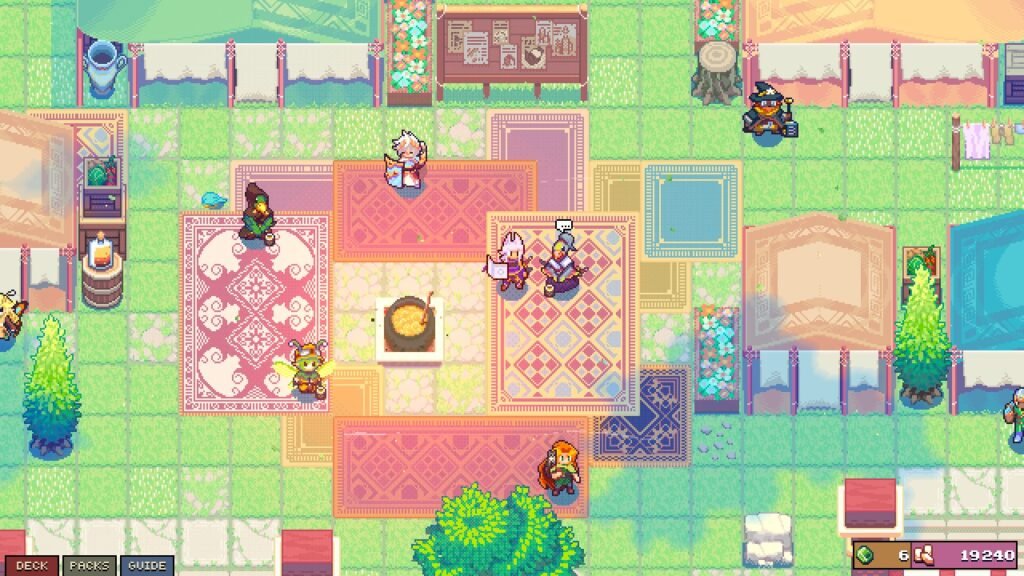
Between dungeon expeditions, you’ll return to Adventurers’ Town, where the pace slows considerably. The town acts as your central hub, giving you somewhere to prepare for future adventures, manage your growing card collection, and interact with the characters who live there.
You can acquire new cards and unlock additional options by opening booster packs, introducing a collectible card game element to the progression system. You could find a card that strengthens an existing strategy or something completely unexpected that inspires you to build an entirely different deck.
The town also includes NPCs offering quests and other activities, providing additional reasons to spend time outside the dungeons. If you’ve had enough of fighting monsters, there’s even a fishing minigame. After spending an afternoon battling giant slimes, dodging magical attacks, and trying not to lose your most valuable cards, sitting beside the water with a fishing rod sounds like the perfect way to relax.
The quieter activities help make Adventurers’ Town feel like more than a collection of menus. It’s somewhere to regroup, experiment with new ideas, and prepare for whatever trouble you’ll inevitably wander into next.
Why Dungeon Drafters Deserves a Look
Dungeon Drafters provides a combination of tactical RPG combat, mystery dungeon exploration, and collectible card mechanics. Its grid-based battles encourage careful positioning, while the extensive card collection provides plenty of opportunities to experiment with different strategies.
The ability to move beyond each character’s starting deck is another appealing feature, giving players freedom to discover combinations that suit their preferred approach. Its dungeon exploration also adds something different to the usual roguelike deckbuilding games. Rather than moving between a series of card encounters, you’re exploring environments, discovering secrets, rescuing adventurers, and deciding how much treasure you’re willing to risk before returning to safety.