

Twenty champions, three gothic campaigns, and 21 stages of increasingly difficult battles await in Harrowtide Survivor, a free-to-play Android survivors-like where even your strongest character can get wiped out by a bad build. We spoke exclusively to solo developer Rafael Marian Vanca of Vanra Systems about the game, its progression systems, and the challenges of bringing another horde-survival game into an already crowded genre.
Rafael has already published 19 apps, but he’s also working full-time as an embedded software engineer. That leaves evenings for everything from coding and balancing to handling artwork, advertising, and billing. As he told us, making Harrowtide Survivor was the fun part. Getting people to actually discover it, with no marketing budget to help, has been considerably harder.
The game itself takes the familiar Vampire Survivors formula and gives it a gothic setting, with Undead, Orcs, and Vampires spread across three campaigns. Each of its 20 champions has a signature ability, but even after investing in permanent upgrades, a poor build can still bring a promising run to an abrupt end. We asked Rafael how much those champions really change the experience, what keeps players coming back, and whether Harrowtide Survivor might eventually make the jump to PC.
You’re a solo developer taking on a genre with some pretty big names in it. What’s been the hardest part of getting Harrowtide Survivor to where it is today?
Doing everything alone has been the hardest part. Coding, art integration, balancing, managing the store listing, ads, billing, and now marketing all compete for the same evenings. Making the game itself was the fun part. Getting it in front of players with no marketing budget has been much harder than building it.
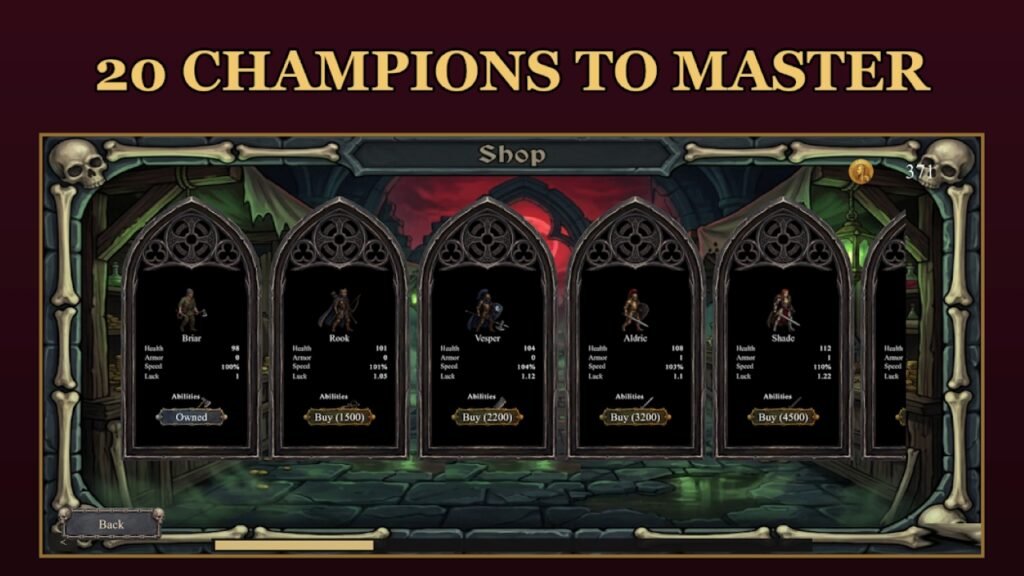
Twenty champions is a pretty generous lineup. How different do they feel once we’re actually playing? Will switching champions change our approach, or is it more about finding one whose abilities suit us?
Each champion has their own stats and a signature ability that nobody else gets. They also share a pool of around two dozen weapons and abilities, including axes, daggers, crossbows, boomerangs, area attacks, healing, and more.
The shared pool keeps runs flexible, but each champion’s signature ability and stats encourage a different playstyle. Some work better when you’re fighting enemies up close, while others are more suited to keeping your distance and kiting enemies around the map.
For example, the starting character is relatively weak, with only a simple knife and low damage. Later, you can unlock characters such as dwarves and elves, with stronger weapons and different advantages.
Can a fully ranked champion still get absolutely destroyed by a bad run, or does all that hard work eventually make them pretty difficult to kill?
Yes, even a fully ranked champion can still lose. Ranking gives permanent points in Health, Armor, Luck, and Speed, so a champion you’ve spent time improving can survive mistakes that would defeat a fresh character. But the hordes keep growing, the bosses hit hard, and a run with poor upgrade choices can still fall apart.
The game is designed to be difficult. You can have the best champion available, but if you’ve put together a weak build or aren’t paying attention, you can still lose, even at level one. Ranking makes you stronger, but it doesn’t make you safe.
How much control do we have over the direction of a build? Can we go into a run knowing what we want, or do we have to work with whatever the game throws at us?
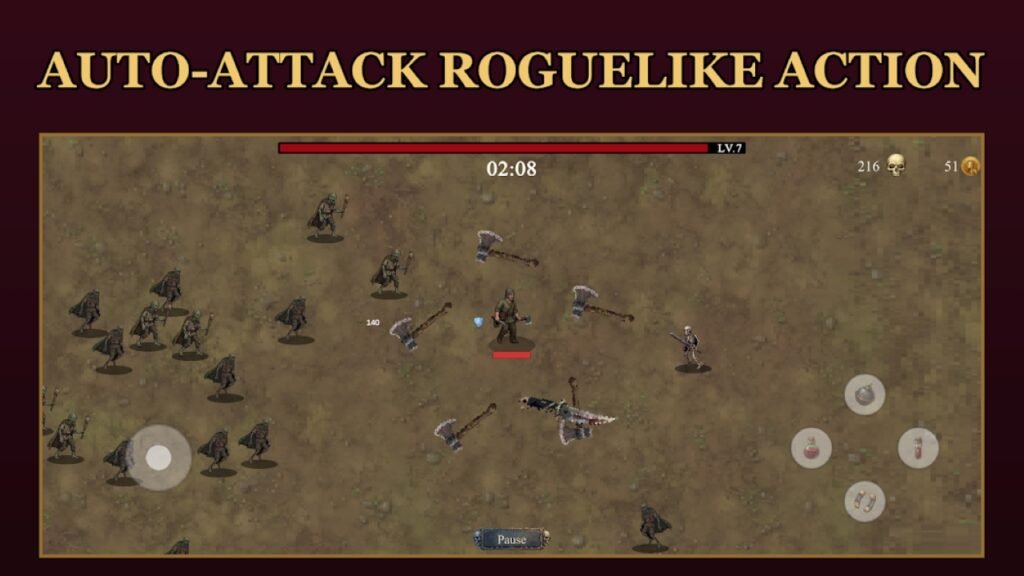
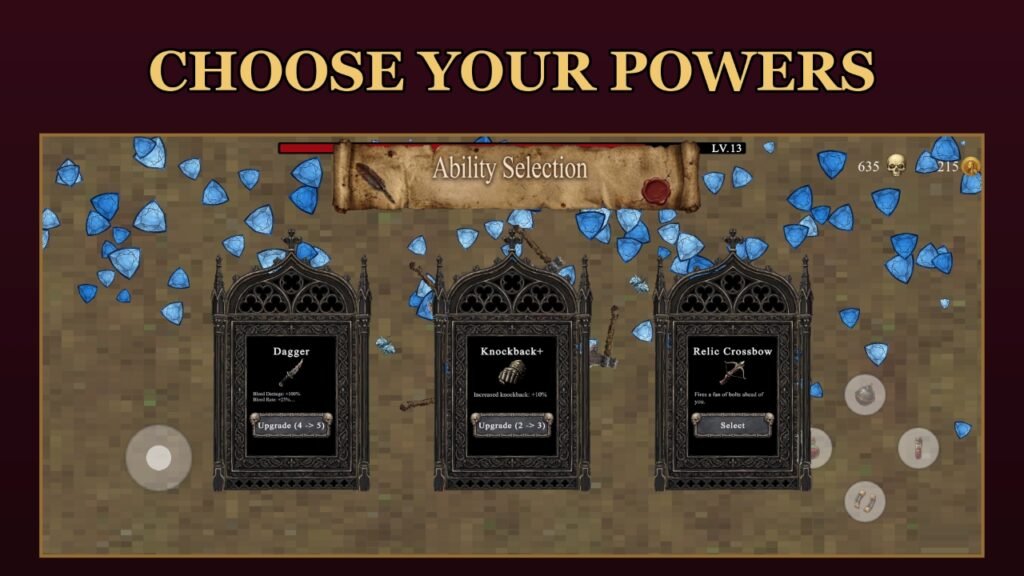
At every level-up, you choose whether to take a new ability or upgrade one you already have. You can start a run with a particular build in mind. For example, you might want to focus on stacking projectiles. However, the choices available at each level-up change, so you can’t guarantee that you’ll get exactly what you want.
You can plan ahead, but you also need to adapt to the upgrades the game offers.
We’ve got three campaigns covering Undead, Orcs, and Vampires. Aside from the enemies trying to kill us, what makes each campaign different to play?
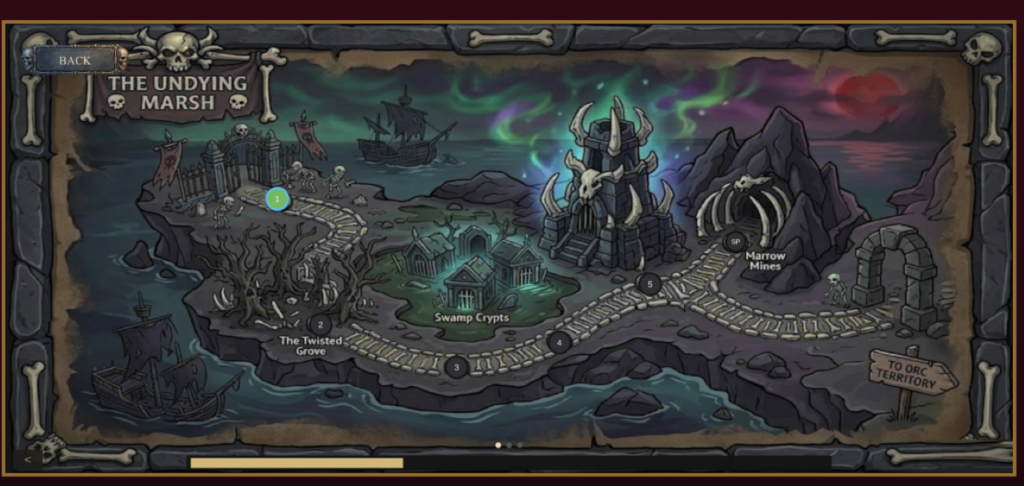
There are three campaigns covering Undead, Orcs, and Vampires, with 21 stages in total. Each campaign has its own hand-drawn gothic maps, bosses, and mini-bosses. As you progress through the maps, the difficulty continues to increase, with more and more enemies appearing for you to fight.
One of the biggest reasons people stick with roguelites is that there’s always something else to try. Once we’ve finished the campaigns and unlocked our favorite champions, what’s going to keep us coming back?
There are 20 champions to unlock using gold and permanently rank up, along with 21 stages to clear across the three campaigns. The runs are also short enough to play during a bus ride, so you don’t need to set aside a lot of time to have another attempt.
As every level-up offers different choices, playing the same champion on the same map rarely results in exactly the same run twice.
The game is free, with ads and optional purchases. How much can someone unlock without spending anything, and are there any advantages that paying players get that others can’t earn?
The game is free to play, with banner ads and optional rewarded ads. For example, you can choose to watch an ad to revive during a run. There are also optional gold packs and a Game Pass subscription.
Champions are purchased using gold that you earn by playing, so you can unlock them through normal gameplay without spending money.
You can play completely offline, which is becoming a surprisingly nice thing to see in mobile games. Was that important to you from the start?
Yes. I wanted the game to work whether you’re on a bus, a plane, or sitting in a basement with no signal. Gameplay is fully offline, and your progress is saved directly on your device.
Only ads and purchases require an internet connection.
Are there any features you really wanted to include but had to leave out of this version?
I’d like to develop more complex fighting animations, and that’s something planned for the next version. Time is the biggest limitation. I’m an indie developer with more than 20 apps, including 19 that have already been published, and I also work full-time as an embedded software engineer.
That doesn’t leave me with much free time to work on everything I’d like to include.
And finally, is Android where you see Harrowtide Survivor staying, or would you like to bring it to PC or iOS eventually?
I’d like to bring the game to iOS later, and definitely to PC as well.
Twenty Champions, Three Campaigns, and Plenty of Hordes Left to Fight
There’s no shortage of survivors-likes to choose from these days, and Harrowtide Survivor isn’t pretending to reinvent the formula. Its appeal is in having 20 champions to experiment with, a progression system that rewards repeated attempts without making defeat impossible, and three gothic campaigns to fight through whenever you’ve got a few minutes to spare.
Being able to play the whole thing offline is another welcome touch, particularly for a free mobile game. You can work through the campaigns, earn gold, and unlock champions without needing an internet connection or spending money, although optional purchases and advertising are part of the package.
For Rafael, the next challenge is getting more people to discover what he’s built. Between a full-time engineering job, 19 published apps, and plans to improve Harrowtide Survivor further, there doesn’t appear to be much spare time left in his schedule. He’s also hoping to bring the game to iOS and PC eventually, although there’s no confirmed release window for either.
For now, Harrowtide Survivor is available on Android through Google Play. It’s free to jump in, and if your fully upgraded champion gets flattened in the first stage, apparently that’s working exactly as intended.