
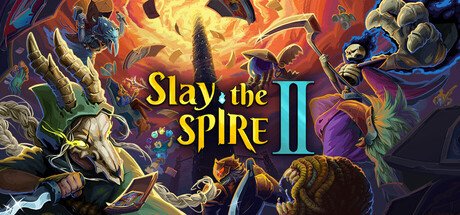
Creating a sequel to Slay the Spire was never going to be easy. When the original launched, it didn’t just become one of the most successful roguelike deckbuilders ever made, it helped define an entire subgenre. More than six years later, developers are still borrowing ideas from its card design, relic systems, and approach to replayability.
So the obvious question is how do you improve on something that was already remarkably close to getting everything right?
So far, the answer appears to be, carefully.
Early Access to Slay the Spire 2 has largely delivered what fans were hoping for. The core formula remains intact, while new cards, relics, enemies, and mechanics help the sequel feel like a genuine evolution rather than a simple expansion pack. Five playable characters, including two newcomers, provide fresh ways to approach runs, while co-op support adds an entirely new dimension to the experience.
For the most part, it works. The problem is that players have already started doing what Slay the Spire players do best. Breaking the game.
At higher Ascension levels, particularly Ascension 10, certain infinite combinations and looping strategies are proving far more powerful than intended. Once assembled, some builds can effectively remove the challenge from encounters, turning what should be difficult late-game runs into exercises in execution rather than adaptation.
That’s not entirely surprising. One of the reasons the original game became so beloved was because it allowed players to discover absurdly powerful interactions. Finding a combination that feels like it shouldn’t exist is part of the appeal.
The challenge for Mega Crit is deciding where the line sits between “powerful” and “too powerful.”
If infinite loops become the dominant strategy, many of the decisions that make deckbuilders interesting start to disappear. Why experiment with different archetypes when one approach consistently outperforms everything else?
Fortunately, this is exactly the kind of problem Early Access exists to solve. The developers have already made it clear that balancing will remain a major focus throughout development, and Slay the Spire has a long history of evolving through iteration. Many of the systems players now consider iconic weren’t perfectly balanced when they first appeared either.
That’s why there’s very little reason for fans to panic. If anything, the current situation is almost reassuring. Players aren’t complaining that the game lacks content or questioning whether the sequel understands what made the original special. They’re finding strategies powerful enough to break it, and for a deckbuilder, that’s usually a much better problem to have.
Slay the Spire 2 still has balancing work ahead of it, particularly at the highest difficulty levels. But if the biggest concern surrounding your Early Access launch is that players are becoming too powerful, you’re probably doing something right.