

The train is ready to leave, the scenery looks lovely, and you’ve got a rather unusual problem. Your locomotive doesn’t run on coal, electricity, or anything resembling conventional fuel. It runs on points earned by dropping little metal balls through a pachinko machine. The only way to reach your destination is to keep those balls bouncing, rack up ridiculous scores, and hope the slot machine above the board doesn’t decide to ruin your journey. Whoever designed this railway deserves either a promotion or a serious conversation with the safety inspector.
PegLotto! launches today, combining slot machines, pachinko physics, and roguelike build crafting into one strangely relaxing train journey. Developed and published by Ludica Inc., the game challenges you to manipulate probability, arrange powerful items, and generate enough points to keep your train moving. With more than 150 items to experiment with and five stages to conquer, there’s plenty of room for both clever strategies and spectacularly unfortunate luck.
Spin the Reels, Drop the Balls
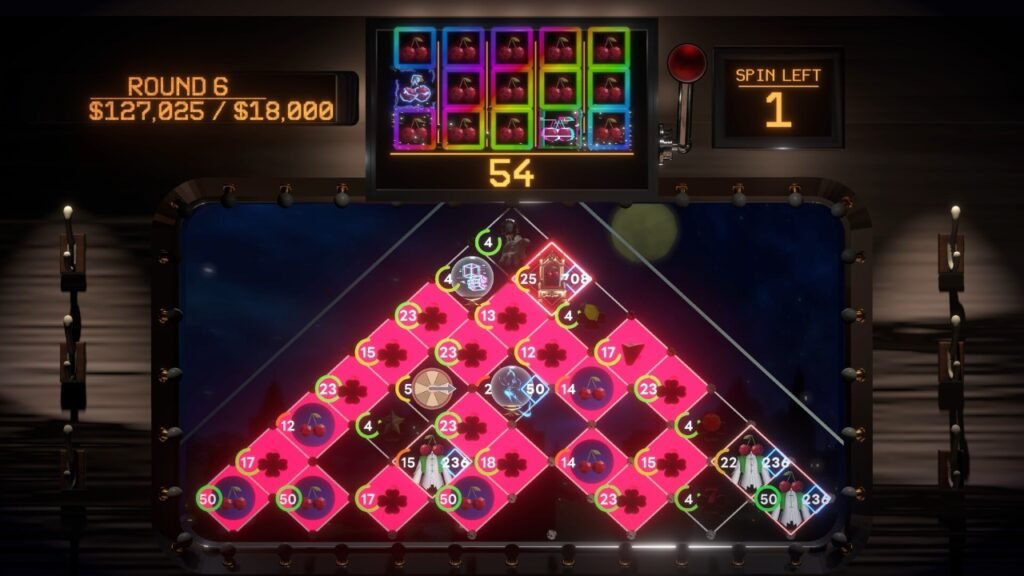
The basic idea behind PegLotto! is simple. At the top of your pachinko board sits a slot machine. Spin the reels, and the results determine how many balls are released onto the board below. Those balls bounce between pegs, earning points as they collide with obstacles on their way down.
The more points you earn, the more energy your train receives, helping it travel farther along its route. Of course, there’s a catch.
Each stage requires you to reach a certain score, and simply dropping a few balls onto the board isn’t going to carry you very far. You’ll need to find ways to increase the number of balls released, improve their scoring potential, and make every bounce count. A lucky spin might give you an immediate boost, but relying entirely on good fortune is a risky way to operate a railway.
A Little Planning Goes a Long Way
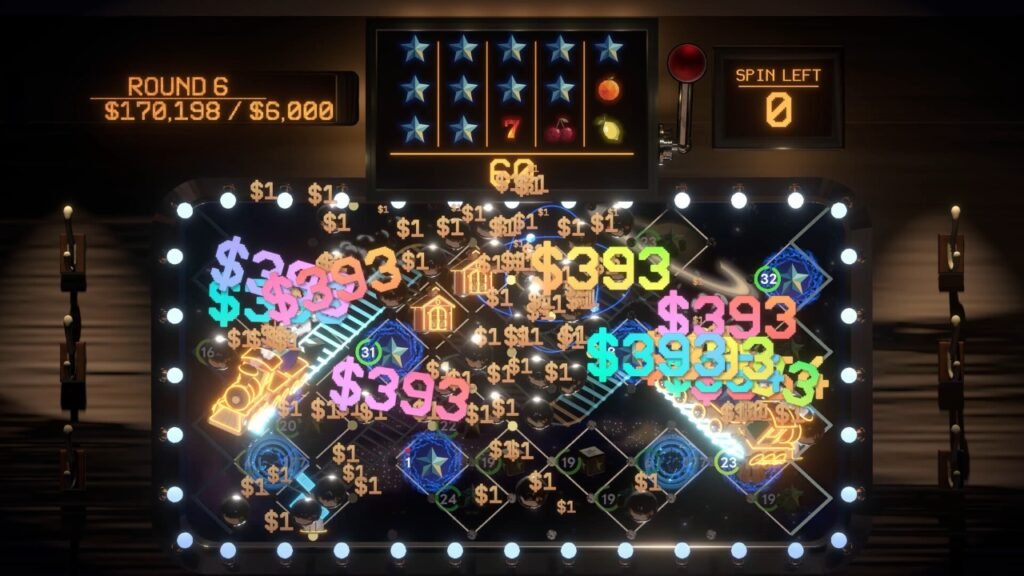
Before spinning, you’ll choose one item from three available options and place it somewhere between the pegs. These items influence how balls behave, how points are awarded, and how different effects interact.
With more than 150 items available, the real challenge comes from discovering combinations that produce enormous scores. Perhaps one item helps generate more balls, while another increases the value of certain collisions. Arrange them effectively, and a relatively ordinary spin could turn into a chain reaction that sends your score climbing far beyond expectations.
The placement of each item matters, too. A powerful effect won’t do much good if your balls rarely reach it, so you’ll need to consider the board’s layout and the paths those unpredictable little spheres might take. A seemingly minor adjustment could make a huge difference.
When everything finally lines up, watching your carefully constructed machine produce an avalanche of points should be immensely satisfying.
The House Doesn’t Always Have the Upper Hand
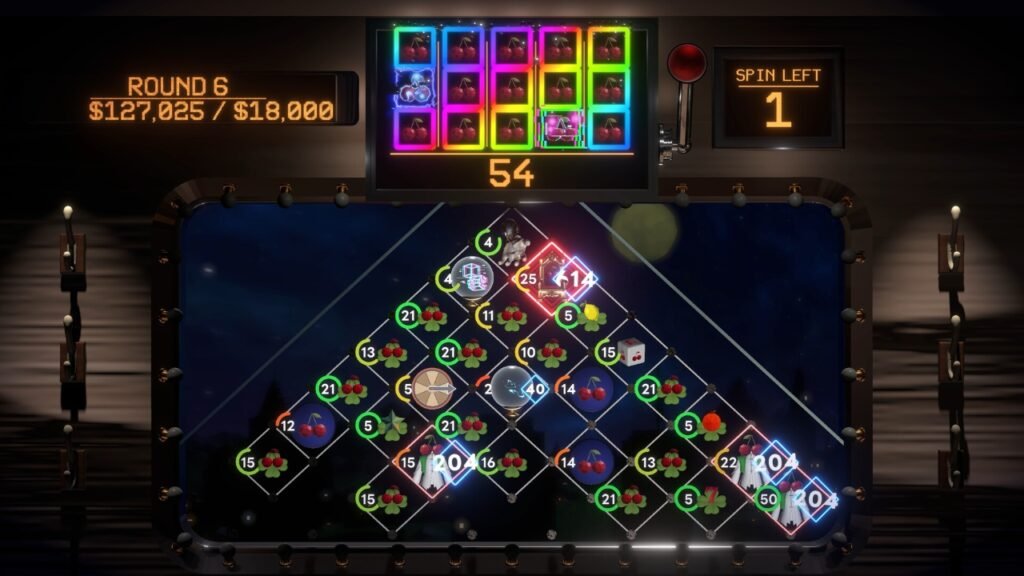
Although PegLotto! features plenty of randomness, the game encourages you to manipulate the odds rather than simply accept whatever happens. Your item choices can influence both the slot machine’s probabilities and the physics-driven pachinko board. That creates two interconnected systems to experiment with.
You could focus on improving your chances of releasing more balls, or concentrate on making each ball worth as many points as possible. The strongest builds will likely involve finding ways to make both systems complement one another. It’s an appealing idea for players who enjoy roguelikes built around increasingly absurd combinations.
Instead of fighting monsters or assembling a deck of attack cards, you’re engineering a scoring machine that becomes more elaborate with every decision. When a promising setup fails spectacularly, there’s always the temptation to start another run and see whether a different combination works better.
Next Stop, Somewhere Unexpected
One of PegLotto!‘s more charming features is the contrast between its frantic scoring system and its peaceful presentation. As your train travels along the tracks, the scenery outside the window gradually changes. Each of the five stages has its own visual identity, giving you something pleasant to look at while your pachinko machine produces increasingly chaotic results.
It’s an unusual atmosphere for a roguelike, where the excitement comes from building outrageous combinations rather than surviving another wave of enemies. Ludica Inc. has also spent recent months refining the experience through playtests, overhauling items, improving visual effects, and expanding the available stages.
The result is a game that turns a familiar gambling-inspired mechanic into a puzzle about probability, positioning, and making the most of whatever the reels deliver.