

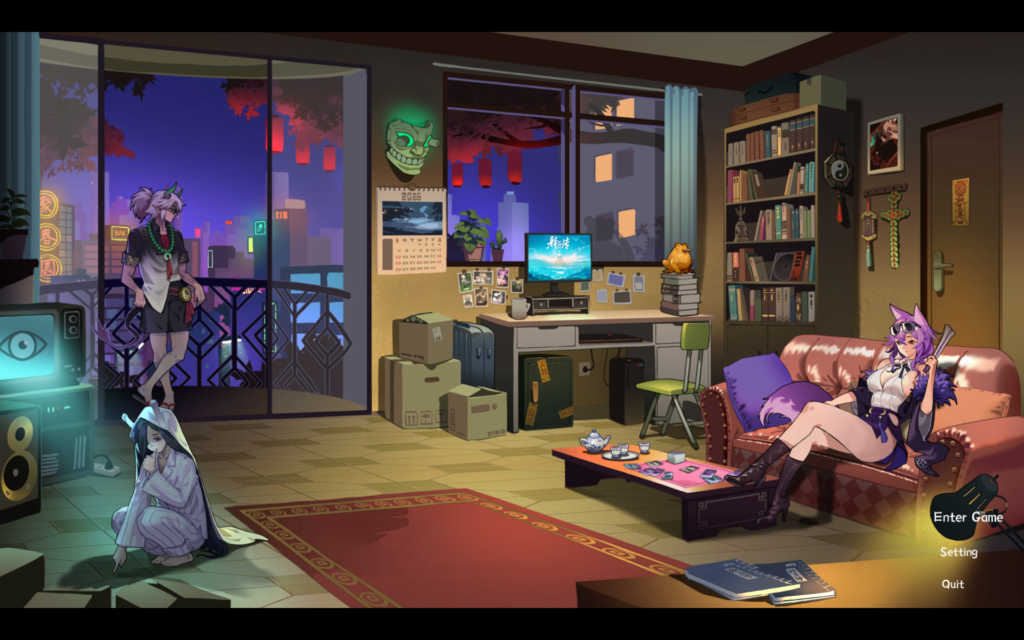
I love a good deckbuilder. So, when Relief launched with its Eastern-inspired story and the possibility of combining more than 1,000 cards with over 300 artifacts, I naturally couldn’t wait to get my hands on it.
Unfortunately, while I really wanted to love the game, I came away with mixed feelings. I happily lost several hours to it, but the longer I played, the more my opinion began to change, and it left me feeling a little…meh.
So, what let the game down and would I still recommend it? Here’s my honest review…
First Impressions: Easy to Pick Up, Fun to Explore
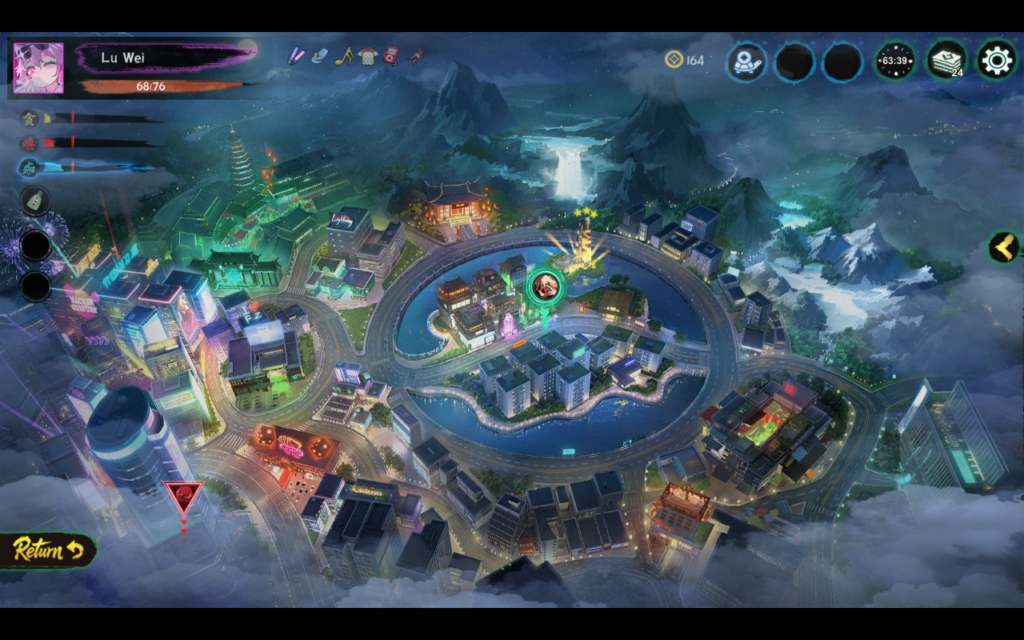
Relief draws heavily from Journey to the West, the famous Chinese literary classic that follows a group of Buddhist pilgrims on their journey to retrieve sacred scriptures. Players familiar with the stale, its mythology, and its legendary characters, will likely recognize more of the story than I did, but thankfully you don’t need that knowledge to play the game.
The first thing I noticed is the game doesn’t ask much of you. There’s no overwhelming tutorial, no complicated mechanics to memorize, and no steep learning curve to overcome. It teaches you the basics and lets you get on with it.
Within my first few runs, I knew exactly what I was doing. I enjoyed experimenting with the different cards, exploring the surroundings, and seeing what cards, drinks, and artifacts I’d uncover next.
One thing I did like was that the opening music is calm, serene, and inspired by traditional East Asian styles, making those early moments genuinely relaxing. Once combat begins, though, it shifts into something much more modern and upbeat. If I’m being completely honest, it didn’t take long before I turned the music off altogether because I found it a little jarring.
There’s also a story running alongside the gameplay. Unfortunately, it never really grabbed me either. More often than not, I found myself skipping through the dialogue so I could get back to fighting demons and spirits.
A Game That’s Just Challenging Enough
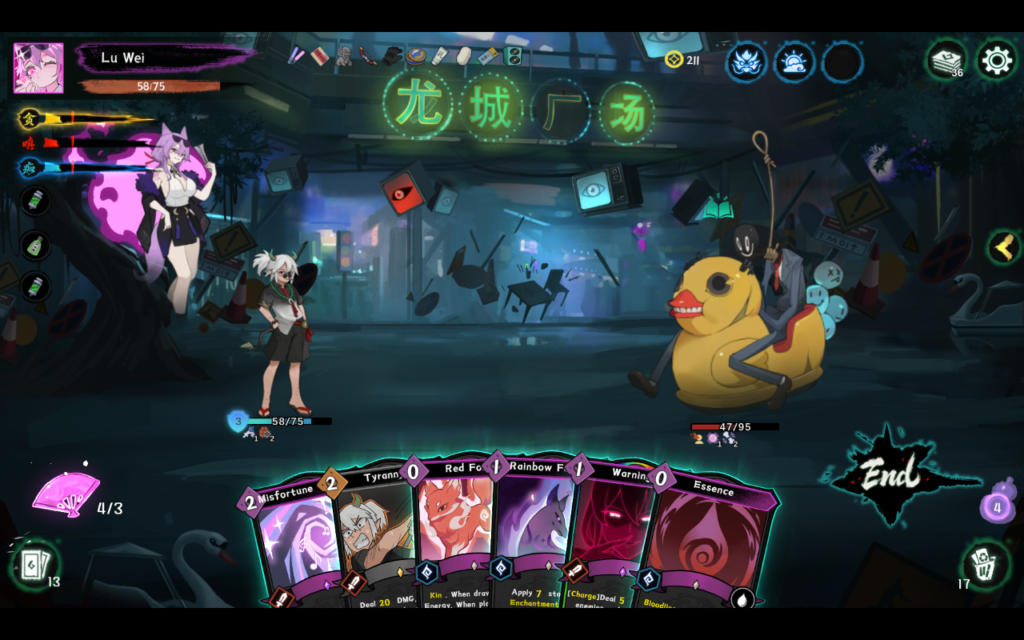
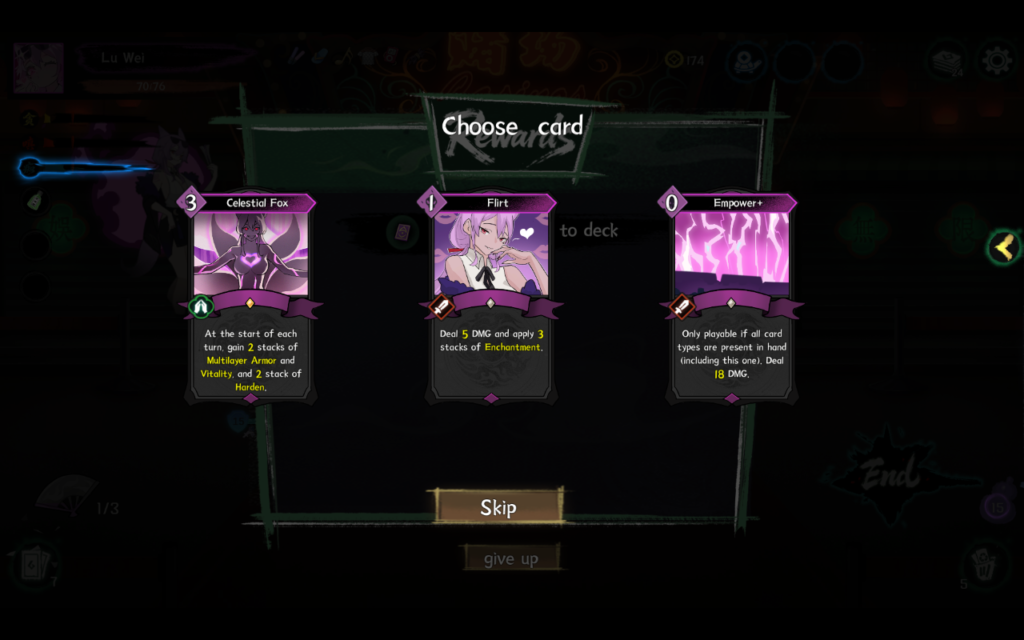
One of Relief’s biggest strengths is how enjoyable those opening hours are. Every run gives you something new to work toward, whether that’s unlocking another card, experimenting with a different strategy, or making progress toward your next playable character. What impressed me most is that each character comes with their own unique cards, giving you another reason to experiment rather than simply sticking with the one you already know.
I also thought the game gets its difficulty about right. I died a few times, but more often than not it was because I’d made a poor decision rather than because the game felt unfair. Learning when to use one of your limited opportunities to rest for example, quickly became part of the strategy. Rest too early, and there’s a very good chance you’ll regret it later.
One feature I appreciated more than I expected was the ability to save and quit whenever I wanted. Whether I had five minutes or an hour to spare, I never felt pressured to finish a run in one sitting, making it an easy game to keep coming back to.
It Didn’t Take Long for the Cracks to Start to Show
Unfortunately, a couple of pretty big issues stopped me from enjoying Relief as much as I’d hoped. Let’s talk about the first one, and that’s repetition.
As I touched on earlier, those opening hours are genuinely enjoyable. Unlocking new cards and characters gave me a reason to keep coming back. The problem is that feeling doesn’t really last.
The dialogue quickly became repetitive, and because there’s no option to turn it off completely, even though you can switch from story to normal mode, some dialogue remains. I found myself skipping through it whenever it appeared. Before long, even the battles started to feel a little too familiar, and I wasn’t nearly as excited to begin another run as I had been at the start.
The other issue, and this one I think really lets it down, is originality. It doesn’t make the story behind the game compelling enough to hook you in. You don’t get invested in the characters or what’s going on outside of the combat scenes. Which means the game’s relying on hooking you in with gameplay, and unfortunately there’s no escaping the comparison to Slay the Spire.
It literally follows that formula so closely that it’s almost impossible not to compare the two, and like so many games, it comes nowhere close to the game that defined the genre.
The whole time I played, I never found the mechanic, card, or idea that made me stop and think, “I’ve never seen that before.” Instead, it feels like it’s simply content following in the footsteps of one of the genre’s greatest games rather than carving out an identity of its own.
Would I recommend Relief?
Relief isn’t a bad deckbuilder, I’ve definitely played worse and I genuinely enjoyed getting stuck into it during those opening hours. However, the repetition eventually started to outweigh the excitement. The fact I couldn’t shake the feeling that I’d rather be playing the game that inspired it is perhaps the game’s biggest problem. It does very little wrong, but it also does very little that feels fresh or memorable.
I’ll probably come back to it from time to time if I’m looking to pass half an hour, but I can’t see it becoming one of the deckbuilders I regularly return to. There are simply too many games in the genre that do the same things a little better in my opinion.
If you’ve exhausted all the other deckbuilders, and you want an easy, familiar game to lose yourself in for a day or night, then I’d recommend it. Just don’t go into it thinking you’re going to find the next big game of the genre. I came away wishing it had taken just a few more risks.
As it stands, it’s a perfectly mediocre deckbuilder.
Pros
- Easy to play
- Fun for a few hours
- Average deckbuilder
Cons
- No originality
- Repetitive after a while
- Lack of compelling storyline