Mewlin the Clicker
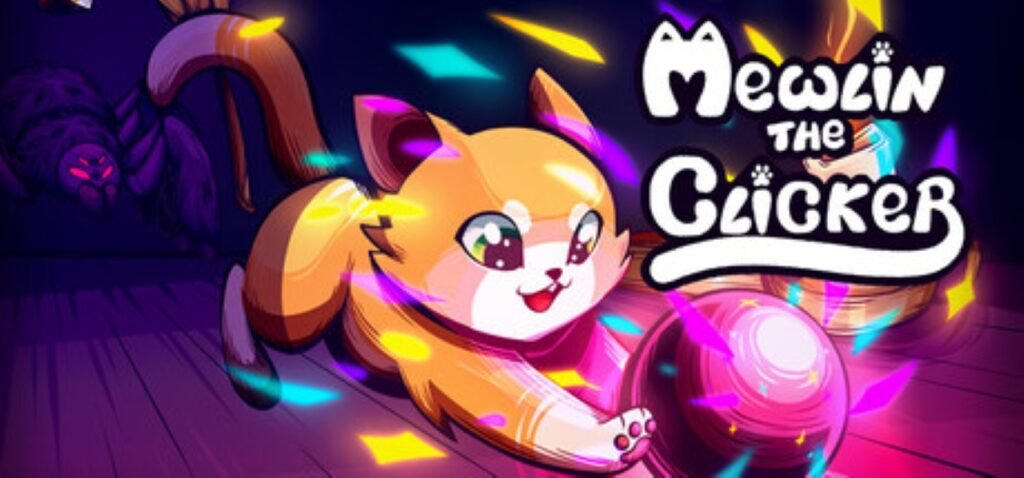
Each run in Mewlin the Clicker has you physically clicking to push a crystal ball across a table, building toward a point threshold before a timer expires. Clear the threshold and you earn a new tarot card; fail it and the run ends. Arcana Rebels released the game on June 5, 2026.
The table is never empty for long. Eight types of obstacles appear with shifting probabilities as runs progress, each carrying its own interaction rules that can work for or against you depending on which cards you hold. Bosses inject a harder layer on top of this, arriving with both active and passive abilities and scaling upward in difficulty the later in a run they show up — eight bosses in total, each with distinct patterns.
From a pool of 24 tarot cards, the deck is built entirely within a single run. Those cards fall into four tiers of rarity, ranging from common picks up through uncommon and rare to epic. Effects cover straightforward boosts like increased points per click or critical chance, but rarer cards reach into the structure of the run itself, manipulating rerolls, bending time, adjusting score multipliers, or recovering a run that would otherwise be lost. Because card selection is randomized and obstacle probabilities shift dynamically, two runs rarely demand the same approach. Players who dislike games where the intended strategy is assembling synergies across many attempts will find little traction here. For everyone else, the 24 stages plus an Endless Mode give substantial room to test how far a given combination can stretch.
Separating Mewlin from standard deckbuilders is the tactile click-to-roll input sitting underneath the card layer — the points you score come from active clicking, not passive resolution, so the feel of a run changes noticeably as cards modify how that clicking behaves and what the ball does when it meets obstacles.