Zyntaris
Every few seconds in Zyntaris, a level-up screen freezes the chaos and demands a choice: pick one of three weapons or magical tomes, each at a varying rarity, and commit to a build direction while the next horde is already forming off-screen. That decision compounds with every subsequent level, and the items gathered from chests between fights push combinations further still, rewarding players who spot how a particular tome’s effect multiplies with a specific weapon’s attack pattern.
Developed by Zardarun and released on June 30, 2026, Zyntaris is a survival roguelike played on randomly generated maps. The structure follows a familiar arc: defeat enemies to collect experience, level up and equip items, push through escalating hordes, and bring down a boss to clear a run. What sets it apart is the breadth of optional presentation. The game supports three camera perspectives — top-down, third-person, and first-person — and layers on twenty-one visual style filters ranging from bright and saturated to dark and cinematic, alongside retro options. A pixel shader can be combined with any of those filters, and a comic-book outline mode can be toggled independently. All of these can be applied to the interface as well, not only the game world, making Zyntaris unusually configurable for a game in this genre.
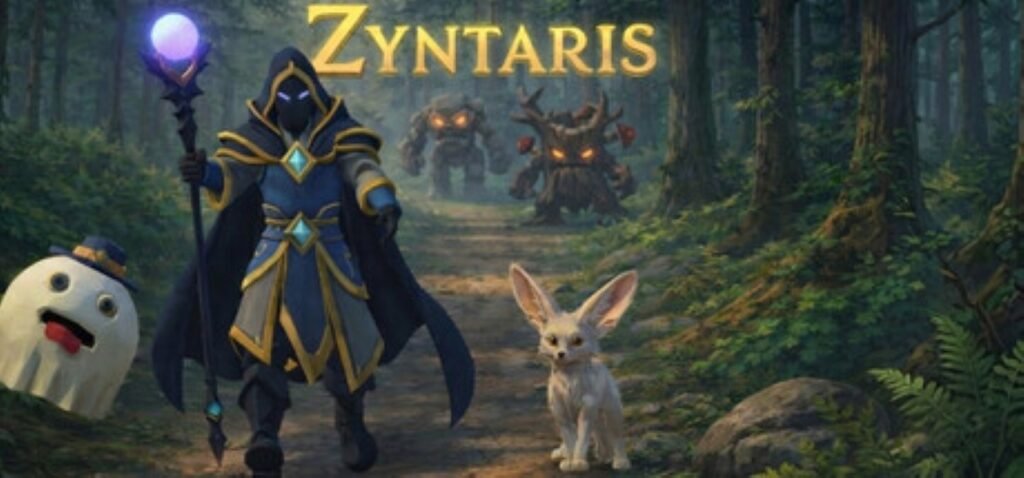
The roster includes multiple heroes, each carrying distinct abilities that shape which weapon and tome combinations become viable. Two players can run the game cooperatively, and clearing the boss unlocks a direct PvP duel between them as a bonus coda to the run, adding a competitive wrinkle to an otherwise cooperative session.
Since launch, Zardarun shipped a large map and UI fixes update and a Steam Deck improvements patch, both in July 2026. A new player’s first hour will likely be spent experimenting with the camera and filter options, dying once or twice to the first boss while learning which item combinations start pulling ahead, and then restarting with a clearer build intention.