

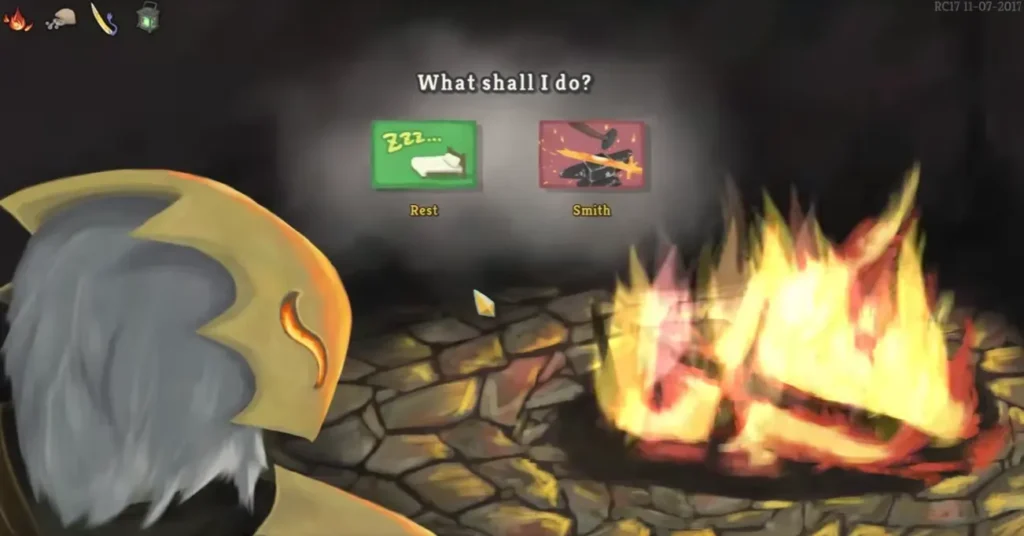
The campfire in Slay the Spire has ruined more perfectly good runs than most bosses.
That might sound unfair. After all, the campfire isn’t actively trying to kill anyone. It doesn’t summon enemies, stack debuffs, or suddenly hit for 47 damage because you forgot to draw a block card. It simply asks a question every time you sit down beside it.
Would you like to feel safer, or would you like to get stronger?
Most players think they’re making a health decision when they click one of those buttons. In reality, they’re making one of the most important strategic decisions in the entire run. The difference between Rest and Smith looks simple on paper, but understanding when to choose each one is often the difference between reaching the Heart and wondering where everything went wrong.
The Upgrade Is Usually Worth More Than It Looks
One of the easiest mistakes new players make is evaluating Rest and Smith as if they’re offering equal value.
Healing is easy to understand because the reward appears instantly. Click Rest and your health bar jumps upward. The benefit is immediate, visible, and reassuring. Smithing is much sneakier.
An upgraded Bash doesn’t feel particularly exciting when you click it. Neither does an upgraded Neutralize or Defend. Nothing dramatic happens, there are no fireworks, and your health bar doesn’t move. Then twenty minutes later you’re ending fights faster, blocking more damage, and wondering why the run suddenly feels smoother.
That’s because upgrades compound. A Rest helps once, but an upgrade helps every time you draw that card for the rest of the run.
The earlier you make that upgrade, the more opportunities you have to benefit from it. A campfire in Act One can influence dozens of future fights, multiple elite encounters, and potentially the final boss itself.
Healing doesn’t have that luxury. Once those hit points disappear, they’re gone.
The Best Players Are Surprisingly Greedy
Veteran Slay the Spire players have a habit of doing things that look completely unreasonable. They’ll arrive at a campfire on half health, stare directly at the Rest button, ignore it, upgrade a card, and walk away.
If you’re new to the game, this feels like watching someone cancel their insurance policy during a hurricane. The annoying part is that they’re often right.
Experienced players understand that stronger decks lose less health. If upgrading a card allows you to kill enemies faster, generate more block, or activate your strategy more consistently, then that upgrade may prevent more damage than the Rest would have recovered in the first place.
This is one of the biggest mindset shifts in Slay the Spire. Beginners protect health but veterans invest it. Neither approach is always correct, but understanding the difference is often what separates a run that survives Act One from a run that snowballs through the entire Spire.
The Map Matters More Than the Campfire
One of the most underrated Slay the Spire skills has nothing to do with combat, it’s reading the map.
The correct campfire decision often has less to do with your current health and more to do with what’s waiting ahead. A campfire before three hallway fights is a very different decision from a campfire before Gremlin Nob. A campfire before an Act boss deserves different consideration than a campfire before a question mark room.
The best players don’t evaluate Rest or Smith in isolation. They evaluate them within the context of the next several rooms. If a brutal elite fight is unavoidable, healing becomes more attractive. On the other hand if your route is relatively safe, upgrading often becomes significantly stronger.
Not Every Upgrade Deserves Your Attention
Of course, choosing Smith creates another problem. What exactly are you upgrading? The temptation is to upgrade whichever card seems strongest. The reality is usually a little more complicated.
Every deck has cards doing the heavy lifting and cards simply taking up space. Upgrade the workers, leave the passengers alone, look for cards that define your strategy and that you play repeatedly. You’ll also want to look for upgrades that unlock entirely new levels of consistency.
An upgraded Neutralize can dramatically reduce incoming damage throughout a fight, while an upgraded Coolheaded can transform a Defect deck from unreliable to smooth. An upgraded Bash creates more opportunities to capitalize on future attacks. Meanwhile, upgrading a mediocre card often leaves you with a slightly better version of a card you didn’t really want to draw in the first place.
When Rest Actually Wins the Argument
So should you just upgrade everything? Absolutely not. Slay the Spire has a long history of punishing players who become too attached to simple rules. There are plenty of situations where Rest is clearly the right option.
If you’re limping toward an Act boss on critically low health, Rest becomes much harder to ignore. Similarly, if an unavoidable elite encounter is sitting two rooms away and your deck isn’t quite ready, Rest suddenly looks a lot more appealing.
The same is often true near the end of a run. By the final Act Three campfire, your deck is largely finished. Unless a specific upgrade dramatically improves your strategy, having additional health for the final gauntlet often provides more value than squeezing out one last card improvement.
The key is understanding that Rest should be a decision, not a habit. Too many players press the button automatically.
The Campfire Isn’t Really About Health
The funny thing about campfires is that they stop feeling like health decisions the longer you play Slay the Spire. They become confidence decisions.
Do you trust your deck?
Do you believe this upgrade will save more health than a Rest would restore?
Do you think your current strategy is strong enough to handle what’s coming next?
That’s why campfires remain one of the smartest mechanics in the entire game. Two buttons, one simple choice, and hundreds of hours of debate.
Rest when you need to, Forge when you can. Learning the difference is one of the biggest steps toward conquering the Spire.