
We’ve all got at least one game we can’t quite understand why more people aren’t playing it. You recommend it whenever you get the chance, watch considerably bigger games get all the attention, and occasionally check its Steam page wondering how it still only has a fraction of the reviews it deserves.
There are plenty of rogue games that fit that description. Some have fantastic ideas we’ve barely seen anywhere else, while others simply do what they do extremely well but just never found the audience you’d expect.
With so many roguelites and roguelikes launching each day, it’s not surprising many slip through the net. So, we’ve picked out 10 rogue games we think deserve considerably more love. From overlooked tactical RPGs and inventive deckbuilders, to robbing banks and fighting your way through the remains of failed startups, these are the games we feel deserve way more love than they currently get…
1. Runeborn
Runeborn takes the usual roguelike deckbuilding idea and swaps the cards for a board filled with runes. Developer iDream Interactive built the game around spinning those runes into different combinations, with each match activating spells and other effects.
You can lock individual runes in place before spinning again, giving you more control over the board as a run develops. New runes and trinkets gradually add more possibilities, turning what initially looks like a fairly simple slot-machine system into something that requires a lot more planning.
It only received its full release in 2026, so it’s still relatively new, but it has already picked up a Very Positive Steam rating from a fairly small number of players. In a genre where new deckbuilders appear constantly, Runeborn has a mechanic that immediately gives it an identity of its own.
2. Pathway
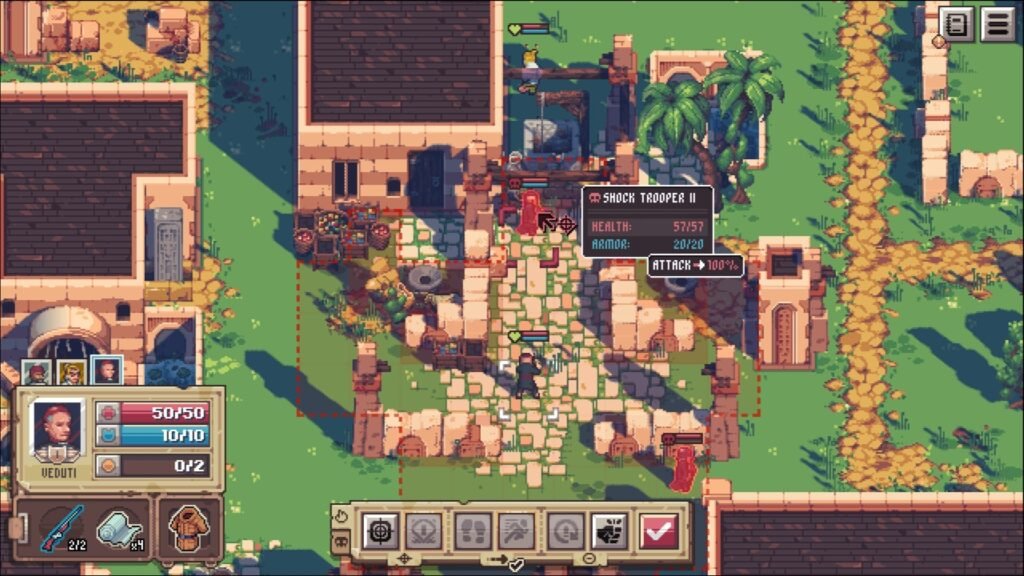
Pathway was released in 2019 by Robotality, sending a group of adventurers across North Africa and the Middle East during the 1930s. Along the way, you’ll search ancient ruins, fight Nazis, deal with occult forces, and occasionally discover things that probably should have stayed buried.
Each expedition is procedurally generated, with your route taking you between different locations containing events, supplies, equipment, and turn-based battles. Combat takes place on small grid-based maps, where cover, positioning, weapons, and the abilities of each member of your party all matter.
It’s been around for years and built up a solid group of players, but Pathway still rarely seems to come up when people talk about tactical roguelites. That’s surprising considering how much personality its setting and pixel art give it, alongside a combat system that keeps expeditions moving without turning every fight into a lengthy tactical exercise.
3. Ring of Pain
The dungeon itself is a circle of cards in Ring of Pain. Monsters, equipment, potions, exits, and other encounters are arranged around you, with each move revealing more of what is waiting further around the ring.
Rather than drawing a hand and playing cards from it, you’re deciding which part of the dungeon to interact with next. Sometimes that means fighting an enemy, sometimes grabbing an item, and sometimes deciding that walking straight past something is probably the better option. Equipment gradually changes your stats and abilities, while the order in which you tackle each encounter can completely change how well a room goes.
It earned strong reviews after launching in 2020 and has maintained a Very Positive rating on Steam, but never quite became one of the names that regularly comes up alongside the genre’s biggest deckbuilders and dungeon crawlers. Considering how neatly it turns dungeon exploration into something that can be easily understood, it probably should have.
4. Iris and the Giant
Iris and the Giant was released in 2020 and uses a roguelike deckbuilder to tell the story of Iris, a young girl dealing with bullying and depression. The creatures and environments inside its imaginary world are tied to those experiences, with memories gradually revealing more about Iris as you progress.
Combat revolves around a deck of weapons, spells, and other abilities, but cards are discarded permanently once they’re used. That means you’re constantly finding replacements and deciding which resources are worth spending now rather than relying on the same small collection throughout an entire run.
Its minimalist artwork and more personal story already make it unusual within the genre, while the disposable-card system changes the way you think about building a deck. Despite earning a Very Positive response from players, Iris and the Giant has remained a relatively unknown game more than six years after release.
5. Rogue Lords
Imagine being put in control of the Devil. Well, that’s exactly what you’re working with in Rogue Lords. Your goal is to build a party from familiar horror villains including Dracula, Bloody Mary, the Headless Horseman, and Frankenstein’s Monster. You then use that party to reclaim the power the Devil lost after being defeated by demon hunters.
Runs combine turn-based battles with events and other encounters, with each character bringing different abilities into combat. The part that makes it particularly unusual is Devil Mode, which lets you spend Diabolic Essence to interfere with the rules themselves. Health totals can be altered, situations can be manipulated, and some outcomes can simply be pushed in your favor.
The game received a more mixed response than most of the others here, particularly around its pacing and balance, so there are understandable reasons it never became a much bigger hit. Even so, the idea of playing as the Devil and literally cheating the rules is one of the more inventive mechanics to appear in a turn-based roguelite, and it’s something Rogue Lords probably deserved more recognition for.
6. Time Break Chronicles
Time Break Chronicles has been in Early Access since 2020, gradually growing into a roguelite built around the turn-based combat and party building of a classic JRPG. Its time-travel setting allows developer Warrior General Games to pull characters from different periods together, giving you a huge roster to build teams from.
There are 100 playable classes to unlock, each with their own skills and role in combat. Relics and other upgrades add even more ways to shape a party, making the interaction between different characters and abilities one of the biggest parts of each run.
Development has continued for years, with its sixth and final story act arriving in 2026 as the game moves closer to version 1.0. Despite all of that, it still only has a few hundred Steam reviews, making it one of the smaller games on this list despite the amount of content now packed into it.
7. Vault of the Void
Vault of the Void is well known among people who spend a lot of time playing roguelike deckbuilders. Outside that audience, though, it’s never really reached the same level of recognition as games like Slay the Spire or Monster Train.
Developer Spider Nest Games designed it around giving the player much more control over their deck between battles. Cards can be swapped in and out freely, unwanted cards can be turned into energy, and Void Stones can be used to add extra effects. You can also see which enemies are coming next, allowing you to adjust your deck around the fights ahead.
That level of control has earned Vault of the Void a particularly strong reputation among dedicated deckbuilder players, many of whom rank it alongside much bigger games in the genre. It has thousands of positive Steam reviews, so it isn’t exactly unknown, but it still feels surprisingly contained within that audience.
8. Turnip Boy Robs a Bank
This one deserves more love purely on its name alone. Turnip Boy Robs a Bank arrived in 2024 as the sequel to Turnip Boy Commits Tax Evasion, but developer Snoozy Kazoo changed the formula considerably for the second game. Instead of another short adventure RPG, Turnip Boy’s latest crime became a twin-stick roguelite.
Each run sends you into the Botanical Bank to steal money, collect weapons, fight security, and reach new areas before eventually heading back out. The money you escape with can be spent on permanent upgrades, gradually allowing you to push further into the bank and deal with tougher enemies and bosses.
The change in genre made it a much more replayable game than its predecessor, while keeping the same strange humor and vegetable-filled world. Reviews have been extremely positive, but it never seemed to attract quite as much attention as Turnip Boy Commits Tax Evasion, despite being a much more substantial game.
9. Going Under
Before Aggro Crab found a much larger audience with Another Crab’s Treasure, the studio released Going Under in 2020. It follows Jackie, an unpaid intern whose new job involves clearing monsters out of failed startups that have quite literally sunk beneath the offices of her employer.
Those failed businesses act as the game’s dungeons, with enemies and environments built around things like cryptocurrency, dating apps, and the gig economy. Almost anything you find can be picked up and used as a weapon, from laptops and keyboards to chairs and other office equipment.
The satire gives Going Under much more personality than its fairly straightforward dungeon-crawling structure might initially suggest, and its writing remains one of the strongest parts of the game. It was well received when it launched but never reached anything close to the audience Aggro Crab would eventually find with its next game.
10. Urtuk: The Desolation
Urtuk: The Desolation was created by solo developer David Kaleta and released in 2021. It’s a tactical roguelike RPG built around managing a small group of characters as they travel through a procedurally generated world where party members can die permanently.
Battles take place on hex-based maps, with positioning and terrain playing a major part in how fights develop. Enemies can be pushed into environmental hazards, characters can support one another through different abilities, and mutations taken from defeated enemies allow you to gradually change how members of your party perform.
It has regularly been compared with Battle Brothers, particularly because of its open-ended campaign and emphasis on keeping a fragile group alive. Steam players have responded very positively to it, but its review count remains surprisingly small for a tactical RPG this deep, especially considering how often the people who have played it recommend it to others.
Too Good to Stay Overlooked
None of these games are completely unknown, and a few already have dedicated groups of players behind them. What they haven’t all had is the kind of wider attention that tends to turn a good rogue game into one of the names everybody in the genre seems to know.
That’s also part of what makes digging through Steam so interesting. There’s always games sitting just outside the usual recommendations, whether they were released at the wrong time, never found the audience they needed, or simply ended up buried beneath everything that came after them.
The 10 games above all do something worth noticing, and hopefully a few of them now have at least one more person paying attention.