

The first thing you need to understand about deckbuilders in 2026 is that they’re no longer trying to be Slay the Spire. That’s probably the healthiest thing that could have happened to the genre.
For years, every new deckbuilder arrived carrying the same challenge. It either needed to compete with Slay the Spire or convince players it was doing something different enough to justify their attention. Most struggled with one of those tasks, and some struggled with both.
The games on this list take a different approach. Instead of asking how closely they can follow the formula, they’re asking how far they can stretch it. That’s how we ended up with deckbuilders inspired by RPG adventures, electrical circuits, claw machines, coin pushers, and even Solitaire.
Some of these games are polished, some are experimental, and a few are genuinely difficult to explain to somebody who hasn’t played them.
What they have in common is that they’re pushing the genre forward. While the obvious names like Slay the Spire 2 continue to dominate conversations, these are the deckbuilders that have impressed us the most during the first half of the year.
1. Cappu Dungeon
Most deckbuilders simply ask players to build the strongest deck possible, but Cappu Dungeon asks for something more. It wants you to do it while managing an army of adorable cats.
That combination sounds far sillier than it has any right to be, but beneath the cute presentation is a surprisingly strategic deckbuilder that constantly forces players to balance risk, rewards, and team composition. The game combines dungeon crawling, card battles, and creature collection. This makes it feel familiar enough for fans of deckbuilders, while still bringing its own personality to the table.
More importantly, it understands something many deckbuilders forget… Winning is fun.
The game rarely gets so obsessed with complexity that it forgets to be enjoyable.
2. Monster Train 2: Destiny of the Railforged
Including Monster Train 2 on a list of the year’s best deckbuilders feels a little unfair. It’s the equivalent of asking whether a professional athlete should be allowed to compete in a local fun run.
The base game was already one of the strongest deckbuilders available. Destiny of the Railforged somehow finds even more room to expand the formula, introducing new clans, additional strategic possibilities, and another layer of complexity for players who thought they’d already mastered the rails.
The impressive part isn’t that there’s more content, it’s that the new content actually makes the game more interesting. That’s much harder to pull off.
3. Dawncaster
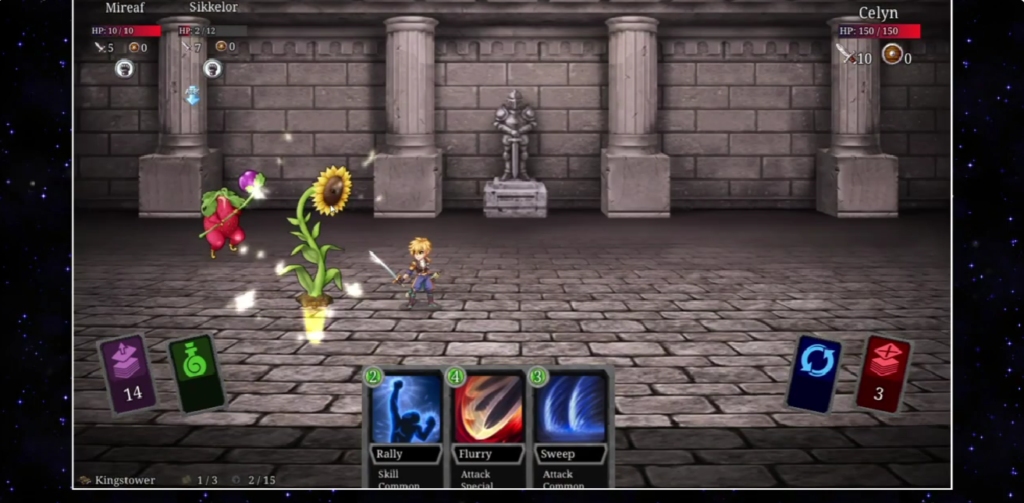
Most deckbuilders focus on runs, but Dawncaster focuses on adventures.
The game leans heavily into RPG design, giving players meaningful choices, character development, branching paths, and a sense that they’re progressing through an actual fantasy journey rather than simply moving between combat encounters.
That doesn’t mean the deckbuilding takes a back seat. Quite the opposite. The card systems provide the foundation for everything, but the RPG element makes each decision feel more personal. The result is a game that often feels closer to a digital tabletop campaign than a traditional deckbuilder.
4. Solitaire Battle
At some point, somebody looked at Solitaire and apparently decided it wasn’t stressful enough. The result is Solitaire Battle.
It’s exactly the kind of idea that sounds ridiculous until you play it. By combining familiar Solitaire mechanics with roguelite progression and competitive encounters, the game transforms one of the world’s most recognizable card games into something surprisingly tense.
Part of the appeal comes from how immediately understandable it is. You already know how to play Solitaire, you just weren’t expecting it to start fighting back.
5. Cupiclaw
One of the easiest ways for a deckbuilder to stand out in 2026 is to stop looking like every other deckbuilder. Cupiclaw understands that.
Its claw-machine-inspired mechanics immediately make it feel different from many of its competitors, creating runs that revolve around manipulation, planning, and making the most of whatever opportunities appear in front of you. The concept is unusual enough to grab attention, but it wouldn’t matter if the gameplay wasn’t there to support it.
Thankfully, it is.
Like many of the best deckbuilders, the strange premise is simply a vehicle for a surprisingly deep strategic experience.
6. Grimslair
Some deckbuilders want players to feel clever, Grimslair wants them to feel uneasy.
The dark fantasy atmosphere does a lot of the heavy lifting here, but what really makes Grimslair memorable is how it constantly creates difficult decisions. Every run feels like it’s asking players to trade safety for power, certainty for potential, and short-term survival for long-term rewards.
That’s where many great roguelites live, not in perfect plans, but in uncomfortable choices. Grimslair understands that exceptionally well.
7. Deckbuilder Fantasy
There is something refreshingly honest about a game called Deckbuilder Fantasy. No complicated title or attempt to hide what it is. Just a deckbuilder, and fortunately, it’s a very good one.
What stands out most is how focused the experience feels. Rather than chasing dozens of different mechanics at once, the game concentrates on delivering satisfying card synergies, meaningful progression, and enough variety to keep players experimenting run after run. Sometimes that’s exactly what the genre needs.
Not reinvention, just flawless execution.
8. Rogue Voltage
Rogue Voltage feels like somebody looked at traditional deckbuilding and decided electricity wasn’t being taken seriously enough.
The game’s circuit-building mechanics create a fascinating layer of strategy where success isn’t just about collecting powerful cards. It’s about understanding how those cards interact, combine, and amplify one another.
The result is a game that often feels more like engineering than combat. That might sound intimidating, nut in practice, it’s incredibly satisfying.
Few deckbuilders this year have made experimentation feel as rewarding.
9. Dimension Ranger
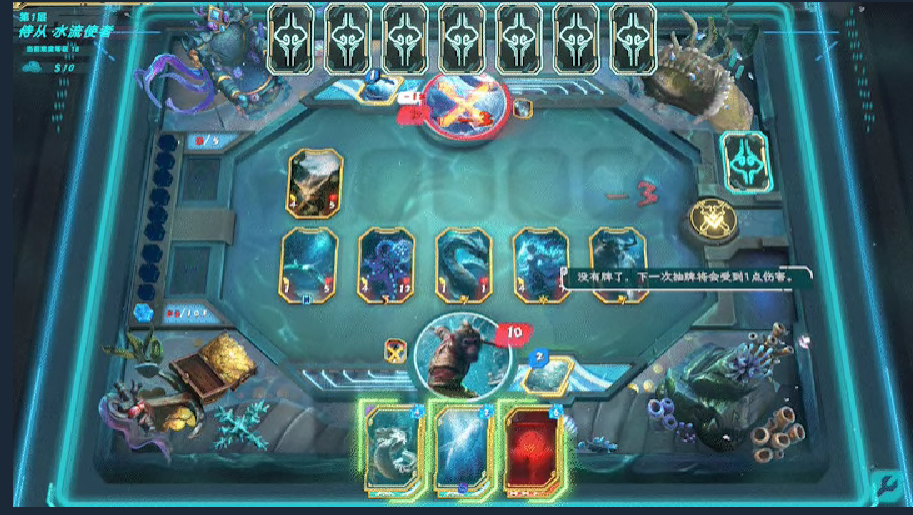
Dimension Ranger understands that deckbuilders don’t always need complicated systems to be interesting.
Sometimes they just need a strong idea executed well.
The game blends roguelite progression, card battles, and retro-inspired presentation into something that feels immediately approachable while still offering plenty of depth beneath the surface. Runs move at a brisk pace, the decisions remain meaningful, and the overall package never feels bloated.
That’s harder to achieve than many developers realize.
10. RACCOIN: Coin Pusher Roguelike
If somebody described RACCOIN to you without showing gameplay, you’d probably assume they were making it up. A roguelike deckbuilder built around coin pushers sounds like the kind of idea that should never work, and yet it absolutely does.
Part of the appeal comes from the constant unpredictability. Every coin, upgrade, and reward creates new possibilities, leading to the kind of chaotic chain reactions that deckbuilder players tend to love. The game embraces randomness without surrendering strategy, which is a difficult balance to strike.
Most importantly, it’s memorable. In a genre crowded with fantasy heroes and familiar card mechanics, that’s a valuable quality.