

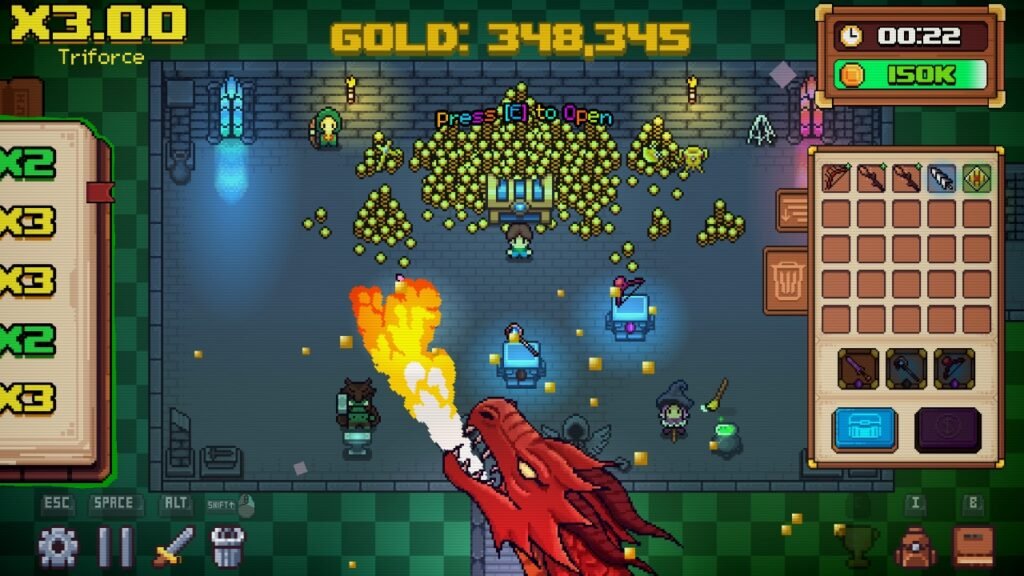
You’ve found a magical treasure chest that never runs out of loot. Swords, shields, rings, guns, all sorts of valuable equipment, yours for the taking. You could probably retire immediately, buy yourself a castle, and spend the rest of your days doing absolutely nothing. Except the king has caught wind of your discovery and decided you owe him two billion gold coins in taxes. Two billion…For a chest you found yourself.
A Game About Opening A Chest is an incremental roguelike from Odd Raccoon and publisher 2 Left Thumbs, launching on Steam today. You’ll spend your time opening an apparently bottomless chest, collecting equipment, and arranging your discoveries on magical Altars that turn combinations of items into gold.
The king isn’t your only headache, either. There’s a goblin helping himself to your weapons, a dragon with a habit of burning through your savings, and a demon capable of wiping out your entire setup.
That Chest Isn’t Going to Open Itself
There isn’t much ceremony involved in collecting treasure. Open the chest, see what comes out, and decide whether it’s worth keeping. Then open it again, because there’s always the chance that the next item will be better.
There are more than 100 weapons and pieces of equipment to discover, including swords, shields, rings, and guns. Each comes with procedurally generated stats and belongs to one of six rarity tiers, starting at Common and climbing all the way to Infernal. You may pull out an ordinary shield, followed by a rare weapon with exactly the bonuses you’ve been looking for. Or you could spend the next several openings collecting equipment that doesn’t quite fit the setup you’re trying to build.
That’s the trap. There’s no shortage of treasure, so there’s very little reason to stop opening the chest. Even when you’ve found something valuable, it’s difficult to shake the suspicion that an even better version might be waiting one click away.
Put Those Swords to Work
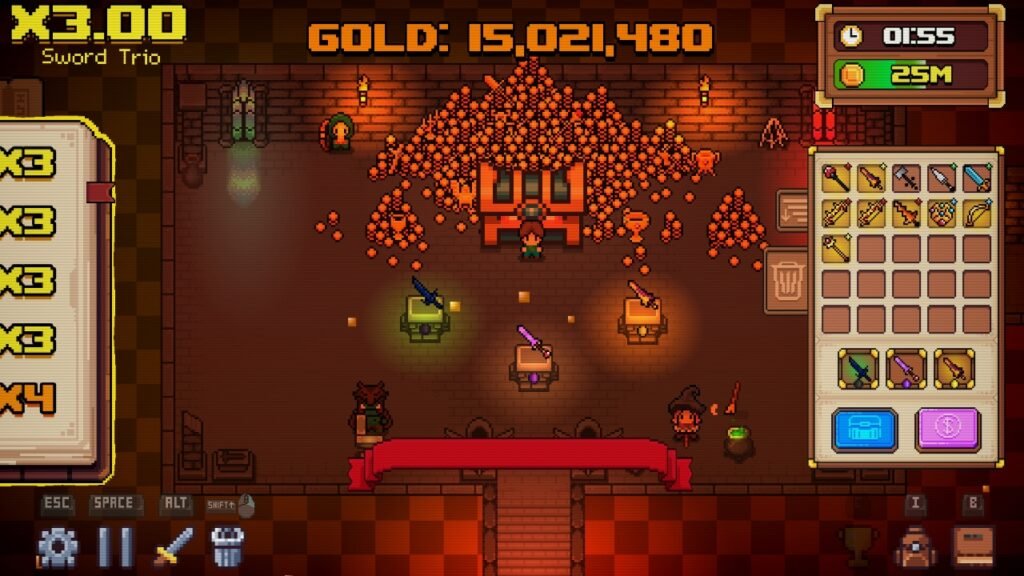
The magical Altars are where your growing collection of equipment starts producing money. Rather than selling everything you find, you’ll arrange items into combinations that activate bonuses and generate gold. Matching equipment by type or class can trigger synergies that multiply your earnings, turning a handful of carefully selected treasures into something far more profitable than their individual values might suggest.
This is where the endless supply of loot becomes useful. With more than 100 items available, you’re constantly finding new pieces that could improve an existing combination or give you a reason to rebuild one of your Altars. That impressive Infernal sword could be worth keeping, but if swapping it for a less valuable item completes a stronger set, hanging onto it may actually be costing you money.
There’s also the question of how much you’re willing to spend protecting your setup. Sooner or later, something will come looking for your treasure.
The Goblin Has Absolutely No Respect for Your Property
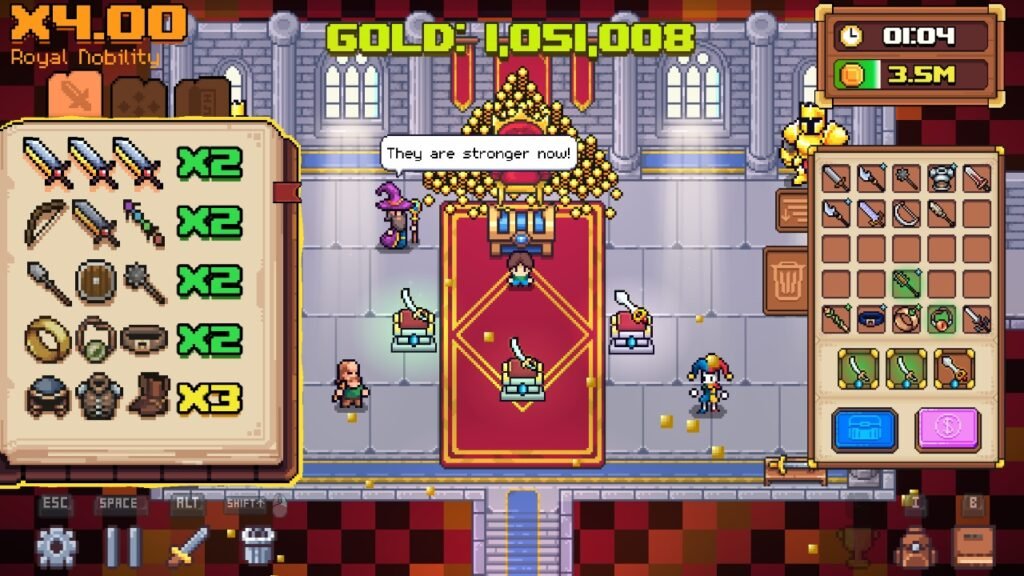
The dungeon is home to several creatures that seem personally offended by the idea of you becoming wealthy. The Great Drake is one of the more expensive problems. When it attacks, it can burn away between 20% and 50% of your accumulated gold. Watching half your savings disappear because a dragon decided to pay a visit is probably enough to make anyone reconsider their financial strategy.
The Thief Goblin prefers a more targeted approach. He steals and destroys a random weapon from your Altars, which could mean losing an ordinary piece of equipment or the one sword holding your most profitable combination together. Then there’s the Chest Demon.
This creature doesn’t bother picking out individual treasures. It can destroy every weapon you’ve placed on your Altars, leaving you to rebuild whatever money-making arrangement you’ve spent your time assembling. You can invest in defenses to reduce the damage these visitors cause, but doing so means diverting resources away from your gold-generating combinations. It’s a constant argument between making more money now and protecting the money you’ve already made.
The goblin, naturally, doesn’t have to worry about any of this. He just turns up, steals your sword, and leaves you to deal with the consequences.
From the Chest Dungeon to the King’s Hall
There are three levels to work through as you attempt to settle your enormous debt, and each introduces something new to complicate the business of collecting treasure.
The Chest Dungeon starts with the core challenge of opening chests and arranging equipment into profitable combinations. Once you’ve got the hang of that, the Astral Void introduces a Madness mechanic that builds over time, giving you another problem to manage alongside your growing collection of loot.
The King’s Hall provides more ways to improve your equipment, including upgrading, socketing, and tempering items to increase their bonuses. Getting through all three levels unlocks Hard Mode, which removes the ability to pause. You’ll still have chests to open, equipment to arrange, and threats to deal with, only now you won’t be able to stop everything while you work out what to do next.
With each new item potentially changing the value of your setup, there’s plenty of tinkering to be done before you’ve got anything resembling a reliable gold-generating operation.
The King Can Wait Another Five Minutes
The appeal of A Game About Opening A Chest isn’t difficult to understand. It gives you an endless supply of treasure, lets you experiment with combinations that produce increasingly absurd amounts of gold, and then introduces a collection of creatures determined to make sure you don’t get too comfortable.
Between the six rarity tiers, procedurally generated equipment, and magical Altars, there’s always another item worth trying or a combination that could be improved. The danger is spending so long rearranging your equipment that you forget the whole point was supposed to be paying off a tax bill.
As for the king, he can have his two billion gold when you’ve finished opening the chest. There’s an Infernal sword in there somewhere, and you’re not leaving until you’ve found it.