

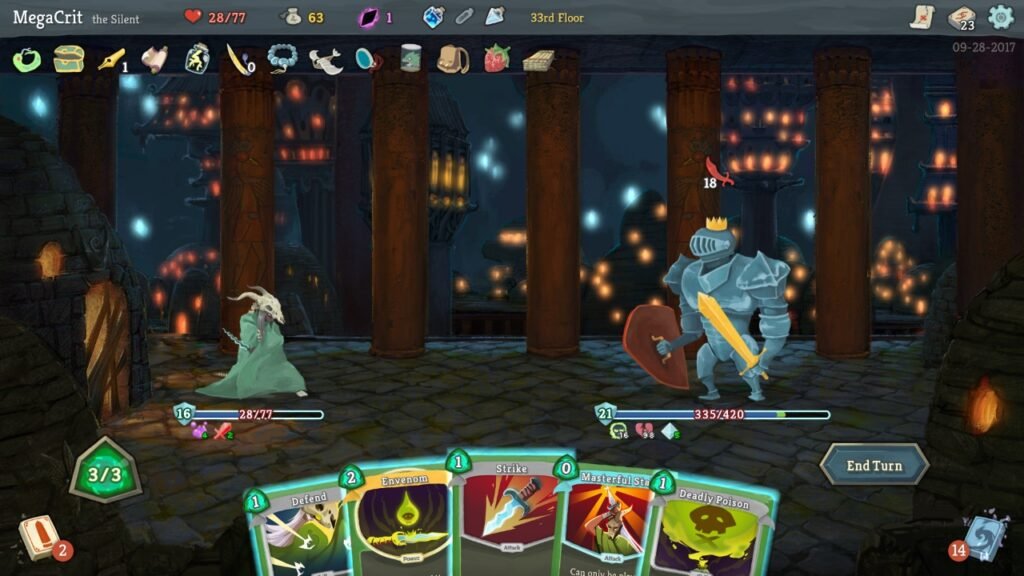
It’s hard not to notice the sheer number of deckbuilders being launched lately. Now listen, I love deckbuilders. The genre has given us some of the smartest, most replayable games of the last decade. I’m addicted to Slay the Spire right now (and have some guides coming up, spoiler alert), but does that mean I want EVERY game to mimic it? Absolutely not! There are currently more than 3,000 games tagged “Deckbuilding” on Steam, with new ones landing pretty much daily.
I know I’m not the only one getting a little fed up with the lack of real choice on offer. Scroll through Steam’s new releases on any given week and you’ll find another game with a climbing structure, a run-based map, relics that modify your cards, and a boss fight waiting at the top. Different coat of paint, same skeleton underneath.
So let’s dig into why there are so many of these games, and, more importantly, shine a spotlight on the ones actually doing something different.
Why Everyone’s Building the Same Deck
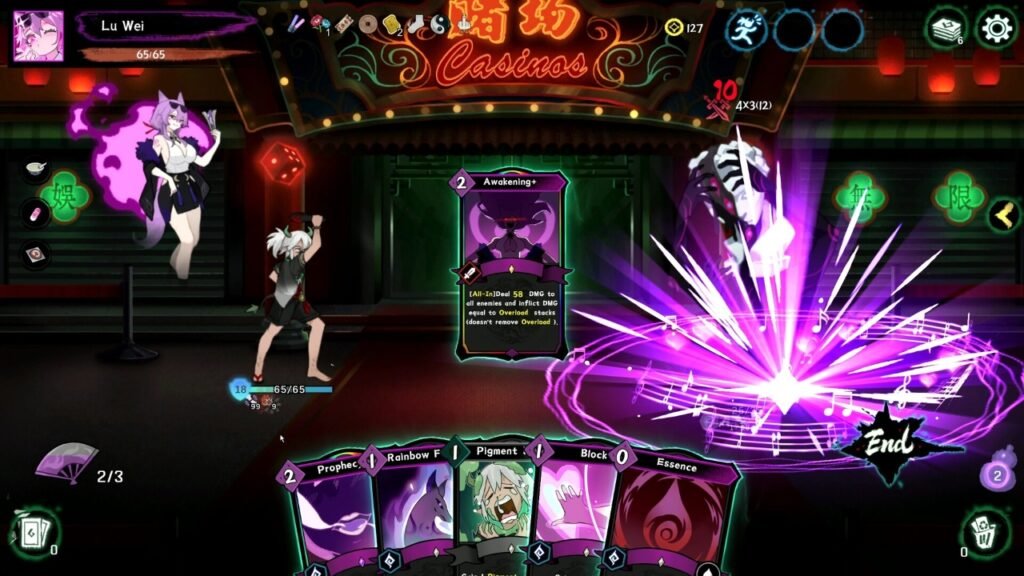
I think there’s a few factors that are pushing developers toward the same handful of ideas when it comes to deckbuilders, starting with cost…
Deckbuilders are affordable to make
Not only did Slay the Spire prove the formula works, but it showed it works cheaply. It’s one of the most influential indie games of the last ten years, and it did it with a small team, procedurally generated maps, and card art that didn’t need a AAA budget. For a solo dev or small studio, that’s an incredibly attractive blueprint. Its a genre with proven commercial success that doesn’t require the production values of an open-world epic.
Replayability without a huge amount of content
The roguelike structure is forgiving to build around. Randomized runs, permadeath, and modular content mean developers can ship a smaller scope of content and still get dozens of hours of replayability out of it. Compare that to designing a hand-crafted campaign, and it’s easy to see the appeal from a resource-management perspective.
Steam’s discovery algorithm rewards clustering
Tags matter. If “roguelike deckbuilder” is already a proven, browsable category with an established, spending audience, releasing into that tag gives a new game a built-in audience to be discovered by, even if it means competing with a thousand other entries fighting for the same attention.
Also, we can’t ignore that frankly, it’s what publishers want to fund. Pitching something like “it’s Slay the Spire but with X” is a much easier sell than pitching something with no obvious comparison point. Investors and publishers like precedent because it means less risk.
The result is a genre that’s simultaneously booming and stagnating, huge in volume, but thin on genuine innovation.
The Deckbuilders Actually Doing Something Different
While there is a ridiculous number of the same kind of deckbuilders, unique ones do exist. You just have to dig a little further than the front page of Steam to find them. These are smaller, often overlooked releases, that took the core idea of “build a deck, fight things, get stronger” and ran somewhere entirely different with it.
So which games have genuinely done something different? Here’s a few that stand out…
Death Howl
Built by a three-person Danish studio, this one throws out the run-based structure almost entirely. Instead of dying and restarting from scratch, you explore a persistent, open-world Spirit Realm, crafting cards from ingredients you find and retreating to regroup when a fight’s too tough rather than losing everything.
It’s a soulslike wearing a deckbuilder’s clothes, and one of the more ambitious genre mashups in years. Progress carries over between sessions in a way almost no other deckbuilder allows, so a brutal encounter becomes a reason to go explore elsewhere rather than a reason to restart the whole game. For a genre defined by permadeath, that’s a genuinely bold swing.
Madcap Mosaic
A tiny indie release that rips the cards out of your hand entirely. Your “deck” is a grid of tiles laid out on a board, and you move your avatar across it to trigger abilities, turning deckbuilding into a spatial puzzle as much as a resource one. It’s barely on anyone’s radar, but it’s one of the most structurally inventive takes on the genre out there.
Between fights you swap two tiles at a time, which means every choice about what to add is really a choice about how your movement puzzle will play out next time, not just what power spike you’re chasing. It’s the kind of idea that sounds small on paper and turns out to change almost everything once you’re playing it.
Fights in Tight Spaces
This one turns John Wick-style close-quarters brawling into a turn-based card game, where positioning enemies and yourself in relation to walls, ledges, and hazards matters as much as the cards you play. Combat is as much a spatial chess problem as it is a deckbuilding one.
Cards represent moves, throws, and combos that fling enemies into each other or off rooftops, and every encounter plays out as a slick, cinematic action sequence built entirely from your card choices. It’s proof that a deckbuilder doesn’t need dungeon-crawling or monster fights at all to work.
Cobalt Core
A sci-fi deckbuilder where you physically dodge incoming attacks by shifting your ship’s position on a track, rather than blocking or healing through cards alone. It folds movement and timing into the deckbuilding loop in a way most genre entries never touch. Your cards fire weapons, raise shields, or slide your ship along a single axis to avoid missiles and target enemy weak points, so reading the battlefield becomes just as important as reading your hand.
Wrapped around a charming time-loop story with a great cast of pilots, it’s routinely cited as one of the best “next Slay the Spire” candidates precisely because it doesn’t play like Slay the Spire at all.
Lonestar
Casts you as a bounty hunter fighting tactical space battles where your cards are literal components you position on your ship. Part FTL, part Cobalt Core, it trades the dungeon-crawl entirely for a spacefaring build-and-position loop. Battles play out as “shockwave” duels where both sides build up power and fire in a single decisive exchange, so deckbuilding becomes about engineering the biggest possible payoff rather than grinding down an enemy’s health bar turn by turn.
Between fights, a surprisingly funny vacation system sends your crew off on downtime events that shape your next run’s resources and story beats.
StarVaders
Bolts tactical, grid-based combat onto a Space Invaders-style structure where enemies descend toward you, forcing constant heat and risk management most deckbuilders don’t touch. One of the freshest ideas the genre’s had in the last couple of years. You’re piloting a mech that overheats the harder you push it, so every turn becomes a balancing act between going aggressive and giving your systems room to cool down.
With three mechs, twelve pilots, and over 400 cards, it’s also stuffed with more build variety than its “underdog” reputation suggests.
Monster Train
Swaps the typical linear climb for defending a vertical train across three simultaneous lanes, forcing you to think about board space and unit placement in a way flat, single-lane combat never asks you to. Rather than facing enemies one at a time on a single track, you’re managing threats climbing up multiple carriages at once, deciding which floor to reinforce and which to sacrifice.
Combining two clans with wildly different card pools and playstyles per run means the deckbuilding puzzle is really two puzzles happening simultaneously, layered on top of a defense-game structure the rest of the genre has barely touched.
Inscryption
Part deckbuilder, part escape room, part psychological horror. It repeatedly reframes what the cards in front of you actually mean, to the point where describing it risks spoiling the whole experience. There’s genuinely nothing else quite like it. What starts as a grim card game against a menacing figure in a cabin unravels into something stranger and more meta the longer you play, folding puzzle-solving and unsettling narrative beats directly into the card mechanics themselves. It’s less “deckbuilder with a story” and more a story that happens to be told entirely through the act of building and playing a deck.
None of these needed to imitate Slay the Spire’s map-and-climb structure to succeed. They took one or two ideas from the genre and built something structurally distinct around them, which is exactly what’s missing from the flood of near-identical new releases each week.
So, Do We Really Need More Deckbuilders?
More deckbuilders aren’t the problem. More deckbuilders that are functionally identical to each other are. When a genre this saturated keeps producing the same shape of game, it doesn’t just make it harder for players to find something new, it makes it harder for the genuinely inventive titles to get noticed.
That’s worth digging into further on its own. What happens to developers, and to players, when everyone chases the same successful formula instead of taking risks? That’s a conversation for next time. For now, let me know how you feel about the number of deckbuilders being released in the comments (or on social media). Do you think we have enough or would you be happy if they were just more…unique?