

Imagine waking up one morning to discover that your peaceful mountain village has been destroyed by a demon. Your neighbors are scattered, monsters have taken over the surrounding countryside, and the local rebuilding committee is nowhere to be found. Naturally, the only sensible solution is to gather a deck of magical cards, venture into the wilderness, and start picking fights with creatures that have crawled straight out of ancient folklore. If you survive, you might even find enough materials to rebuild the village tavern. Every civilization needs its priorities.
That’s the predicament waiting in Pyrene, a roguelike deckbuilder from developer Two Tiny Dice and publisher Indie Asylum. Released on September 13, 2024, it combines turn-based dungeon crawling, unusual card mechanics, and a setting inspired by Basque mythology.
Despite receiving a Very Positive rating on Steam, with 92% of its roughly 680 user reviews recommending it, Pyrene hasn’t attracted the same widespread attention as some of the genre’s biggest names. That’s a shame, because there’s a lot more going on here than its charming artwork might suggest.
A Different Kind of Card Trick
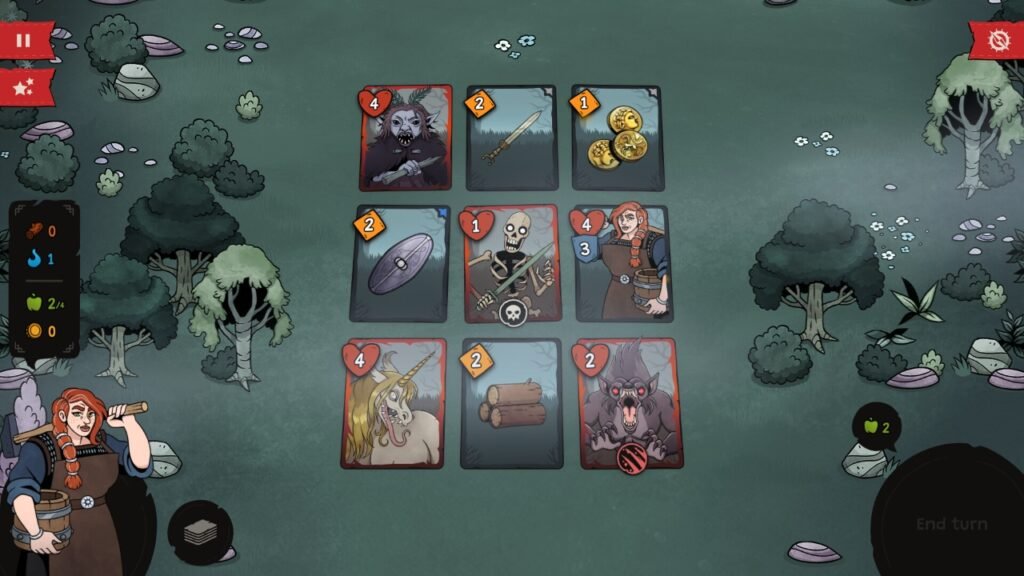
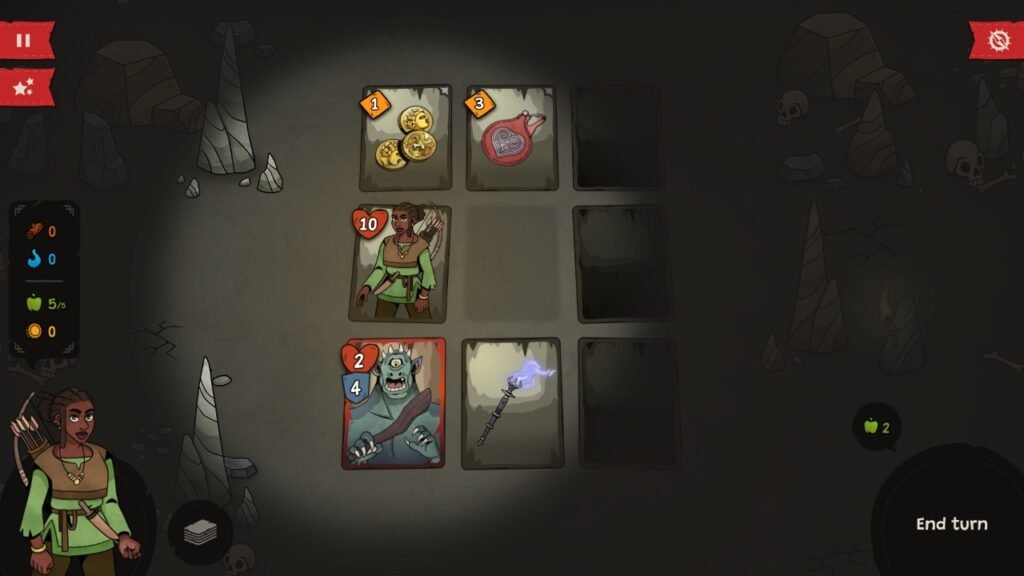
In Pyrene, instead of fighting through conventional card battles you’ll navigate a grid-based battlefield filled with enemies, equipment, and useful resources. Movement is the key to everything. As you travel across the board, you’ll encounter monsters, collect items, and make decisions about which route offers the best chance of survival.
Your cards and equipment influence how these encounters play out, turning each movement into a small tactical puzzle. That means you can’t simply rely on having a powerful deck. You’ll also need to consider positioning, the order in which you encounter enemies, and whether the rewards waiting ahead are worth the damage you might take getting there.
It’s a deceptively simple idea that creates plenty of opportunities for clever decisions. One moment you’re confidently clearing a path through a group of enemies. The next, you’ve realized that the healing item you desperately need is sitting on the opposite side of a particularly angry monster. Suddenly, that brilliant plan doesn’t look quite so brilliant after all.
More Than a Few Tricks Up Your Sleeve
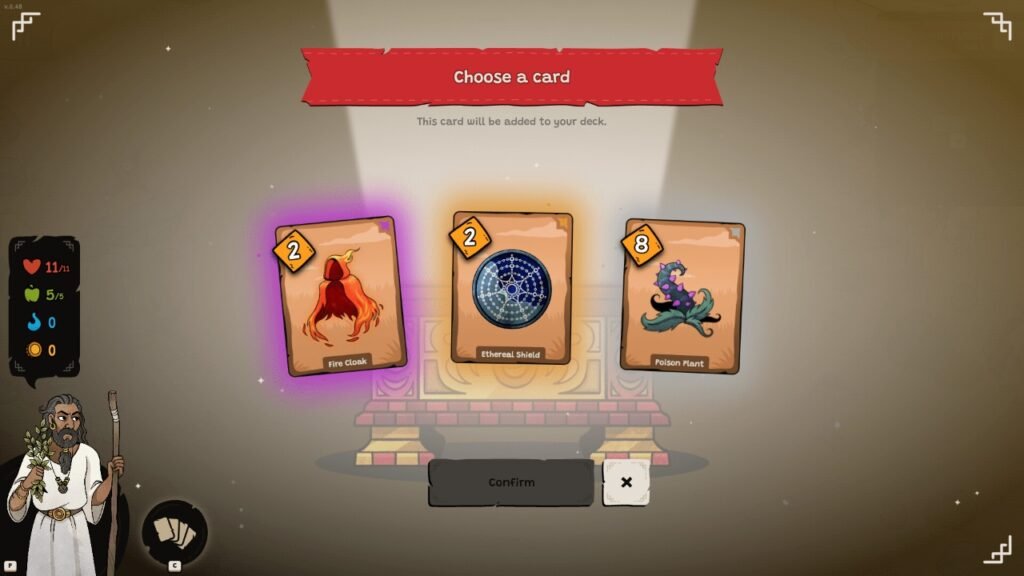
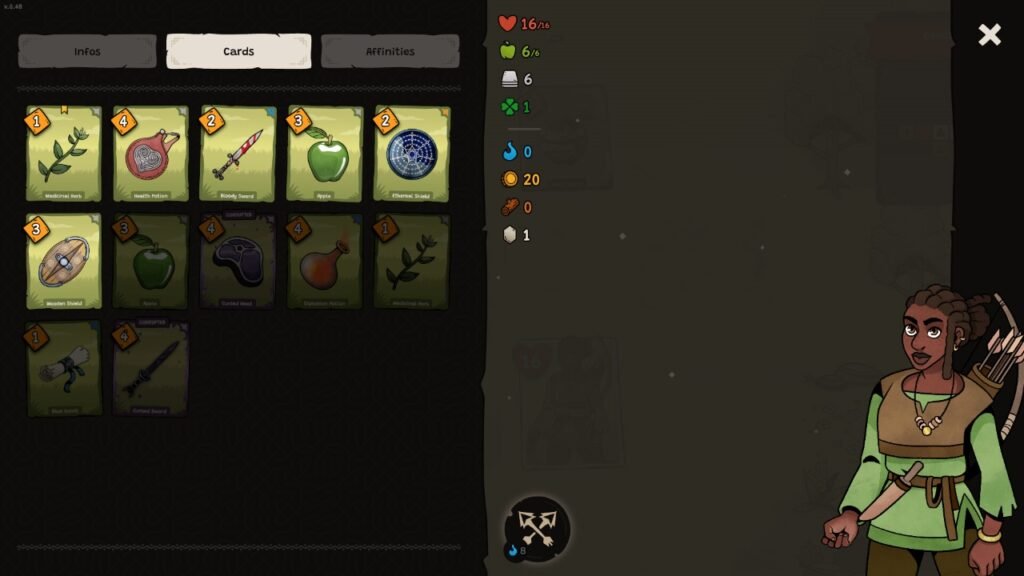
Deckbuilding remains a major part of the experience, even if the combat works differently from what you might expect. There are more than 100 cards and 200 relics to discover, giving you plenty of opportunities to experiment with different combinations.
You can adjust your deck between enemy encounters, swapping equipment and abilities to suit the challenges ahead. Some combinations focus on dealing damage, while others emphasize survival, resource management, or making the most of particular mechanics.
The game also features several playable villagers, each with their own abilities and preferred strategies. Switching characters can change how you approach a run, encouraging you to experiment with equipment you might have overlooked while playing somebody else.
Of course, discovering that combination usually happens just before you make one terrible decision and lose everything. Such is life in the roguelike business.
Demons, Mountains, and Ancient Myths
One of Pyrene‘s most interesting features is its setting. Rather than drawing from the familiar worlds of Greek or Norse mythology, the game explores the folklore of the Basque Country, a region spanning parts of northern Spain and southwestern France.
Your main enemy is Herensuge, a monstrous serpent-like demon from Basque mythology whose forces have devastated your village. As you venture into the Pyrenees, you’ll encounter creatures and supernatural elements inspired by this lesser-explored collection of myths.
The adventure takes you through dark caverns, corrupted swamps, and dangerous mountains, each introducing different enemies and environmental conditions. Terrain modifiers can change how encounters unfold, encouraging you to adapt your strategy rather than relying on the same approach throughout every expedition.
Discovering unfamiliar folklore through the game is a unique angle, especially when the creatures you’re learning about are actively trying to kill you.
Home Is Where the Upgrades Are
Your adventures aren’t solely about defeating monsters. Between expeditions, you’ll return to your ruined village and gradually restore it using the resources you’ve collected. Rebuilding structures unlocks new opportunities to improve your equipment, spells, and future runs.
This gives the game a satisfying sense of progression beyond simply becoming stronger. Every successful expedition contributes toward restoring the community that Herensuge destroyed, giving your repeated journeys into dangerous territory a purpose. It also creates an enjoyable rhythm between exploring, fighting, and returning home to see what you’ve managed to accomplish.
Even an unsuccessful attempt can contribute toward your long-term progress, provided you’ve gathered something useful along the way.
A Hidden Gem Worth Playing Your Cards For
Pyrene has earned praise for its strategic depth, replayability, and distinctive approach to deckbuilding. Its 92% positive Steam rating suggests that the players who’ve discovered it have found plenty to enjoy, even if its review count remains modest compared with the genre’s biggest hits.
There’s also an Endless Mode for anyone who wants to push their favorite builds beyond the main adventure. The game is available for Windows and Apple Silicon Macs, with a free Steam demo for anyone interested in trying its unusual combat system.
If you’re a fan of Slay the Spire, Forward: Escape the Fold, or other strategy-focused roguelikes, Pyrene is worth adding to your list. Its combination of tactical movement, flexible deckbuilding, village restoration, and Basque folklore gives it a personality that deserves more attention.